
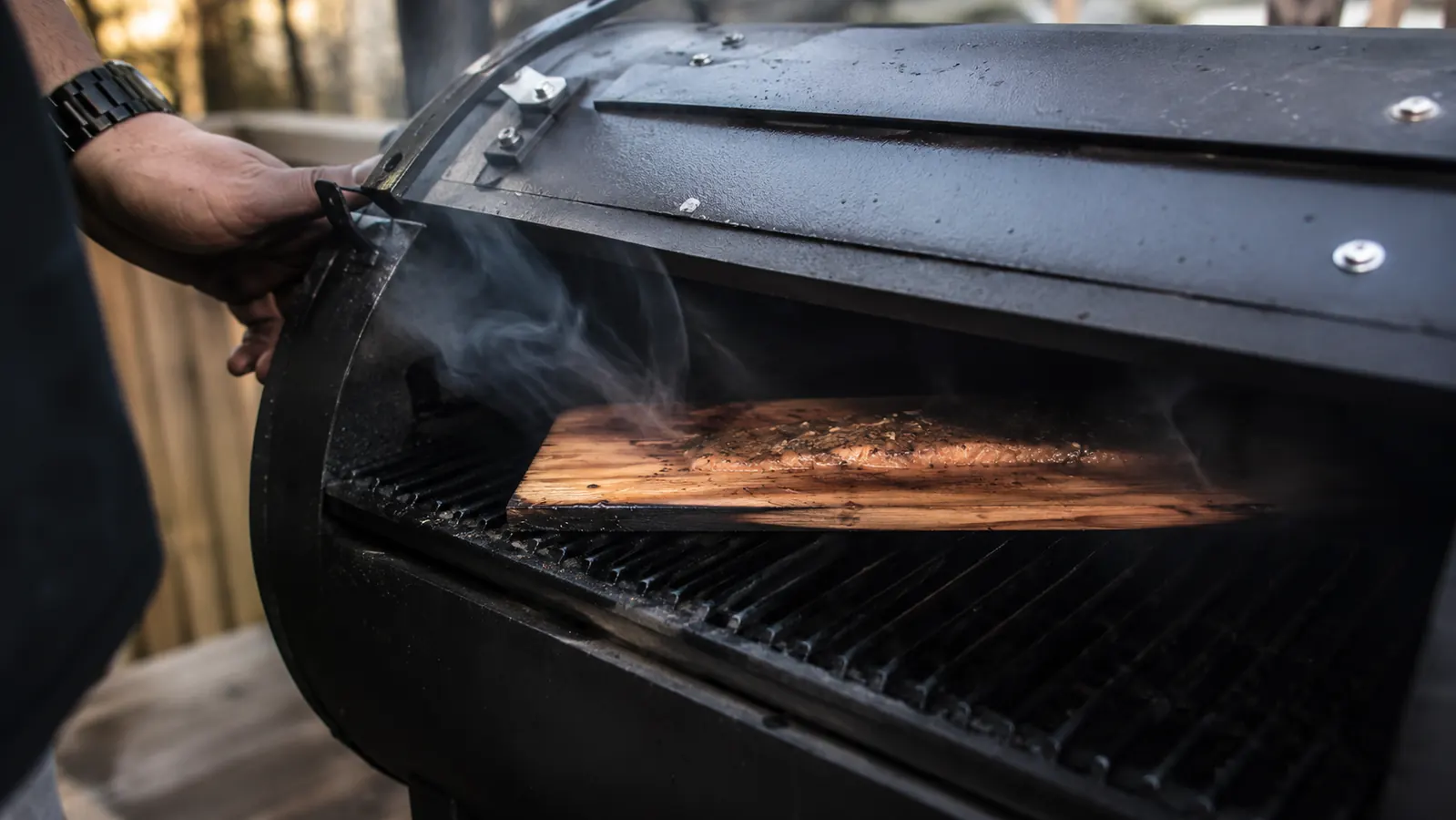
Somebody handed me a bundle of cedar grilling planks at a church potluck about four years ago and said, 'just throw the salmon on this, it's foolproof.' It is not foolproof. I want to say that up front because every article I read before my first attempt made it sound like you just toss a plank on the grill and dinner cooks itself. My first plank caught fire hard enough that my neighbor Ronnie came over to see if something was wrong. Nothing was wrong. That's just what an unsoaked cedar plank does when it meets 400-degree cast iron grates, and nobody had bothered to tell me that ahead of time.
I've bought probably eight or nine packs of these since then, most recently the Grill Gourmet 12-pack, and I use them regularly enough now that I've stopped being surprised by the little things that go wrong. That's really what this article is. Not a hype piece telling you cedar planks will change your grilling life. Just the stuff nobody mentioned to me before I started, so you don't have to learn it by singeing your eyebrows like I did. I still use them, I still like them, but I like them with my eyes wide open now instead of expecting a miracle every time.
The Quick Verdict
Genuinely good flavor and a real crowd-pleaser at the table, but it comes with a fire risk, a real soak-time commitment, and a cost-per-meal that's higher than the pack size makes it look.
Amazon Check Today's Price →Skip the trial and error I went through
The Grill Gourmet cedar planks are the ones I keep reordering, USA-made cedar that actually holds up through a real soak and a real cook. See today's price and pack size on Amazon before your next salmon night.
Amazon Check Today's Price on Amazon →How I've Actually Used These
I'm not a professional reviewer, I'm just a guy who grills for his family and for the church potluck circuit a couple times a month. Over the past four years I've run through probably eight or nine 12-packs of cedar planks, mostly on salmon, a handful of times on trout, and once, against all common sense, on a thick pork chop that honestly didn't need the help. Most of my testing has happened on an ordinary propane grill with a side burner, occasionally on a friend's charcoal kettle when we cook together on weekends.
I don't run controlled experiments with a notebook and a stopwatch. What I do is pay attention to the same things every single time, how long the plank actually needs in water before it stops popping, how much of the pack survives a second use, how much real fire risk there is if I get distracted mid-cook. Those patterns repeated themselves enough times over four years of regular use that I trust them more than any single review I read before I bought my first pack.
The Part Nobody Tells You: Soaking Takes Longer Than You Think
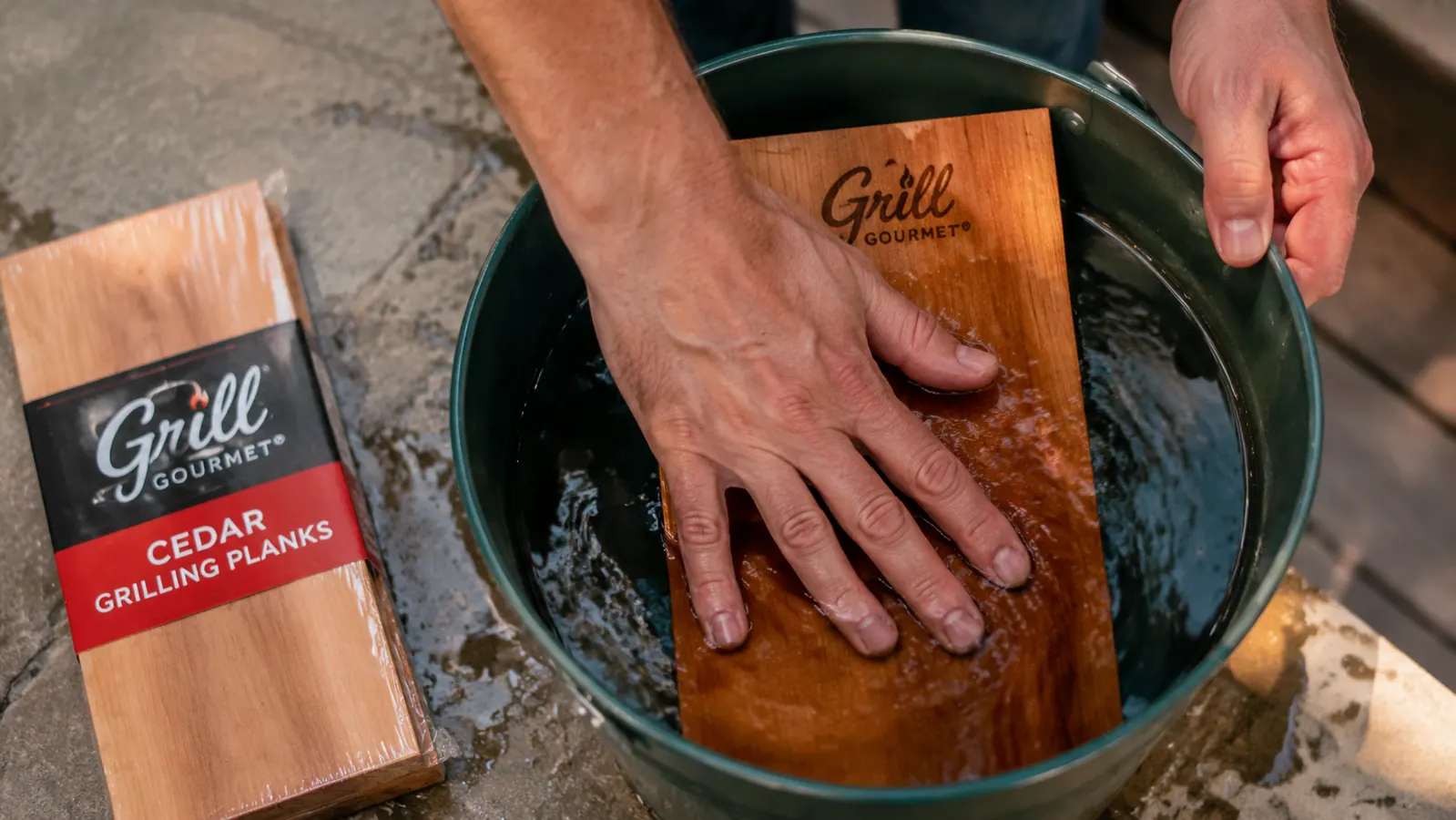
Every package says soak for 30 minutes to an hour. In my experience that's the bare minimum, and it's optimistic. My wife Denise keeps a five-gallon bucket under the porch specifically for this now, and I put the planks in there the morning of, weighted down with a couple of clean rocks so they actually stay submerged instead of floating on top like a piece of driftwood. A plank that floats half out of the water is a plank that's dry on top, and dry cedar on a hot grill does not smoke gently. It smokes like a campfire that got out of hand, and I learned that the hard way twice before I started weighting them down.
The second thing nobody mentions is that a plank that's only been in water for 45 minutes will still crack and pop loudly enough to make your guests jump. That happened at my daughter Melissa's engagement dinner, and half the table thought something had exploded. It hadn't. It was just a plank that needed another 90 minutes in the water. Now I soak overnight whenever I remember to plan ahead, which honestly is maybe half the time. On the weekends where I forget, I've learned to just switch to foil packets instead of gambling on a half-soaked plank.
The Fire Risk Is Real, Not Theoretical
I've had exactly two planks catch a real flame under the fish rather than just smoldering at the edges. Both times it was because I had the lid closed with too much direct heat underneath instead of setting up two-zone cooking with the plank over indirect heat. A plank flare-up isn't dangerous the way a grease fire is, but it will scorch the bottom of your salmon black and bitter in about 90 seconds if you're not standing right there watching. I no longer walk away from the grill once a plank is on it. Not even to grab a drink from the fridge, and my son-in-law can vouch for that because he's tried to pull me away from the grill mid-cook more than once and gotten a firm no.
Keep a spray bottle of water within arm's reach. I didn't for the first year and a half, and I regret every minute of that. Now there's one sitting on the side table of my grill permanently, right next to my tongs, and I use it more often than I'd like to admit. A few quick spritzes on a flaring edge knocks it right back down without dousing your fish in water, which is the whole trick nobody explains in the instructions that come folded inside the plastic wrap.
One Plank, One Use, Usually. Sometimes Two.
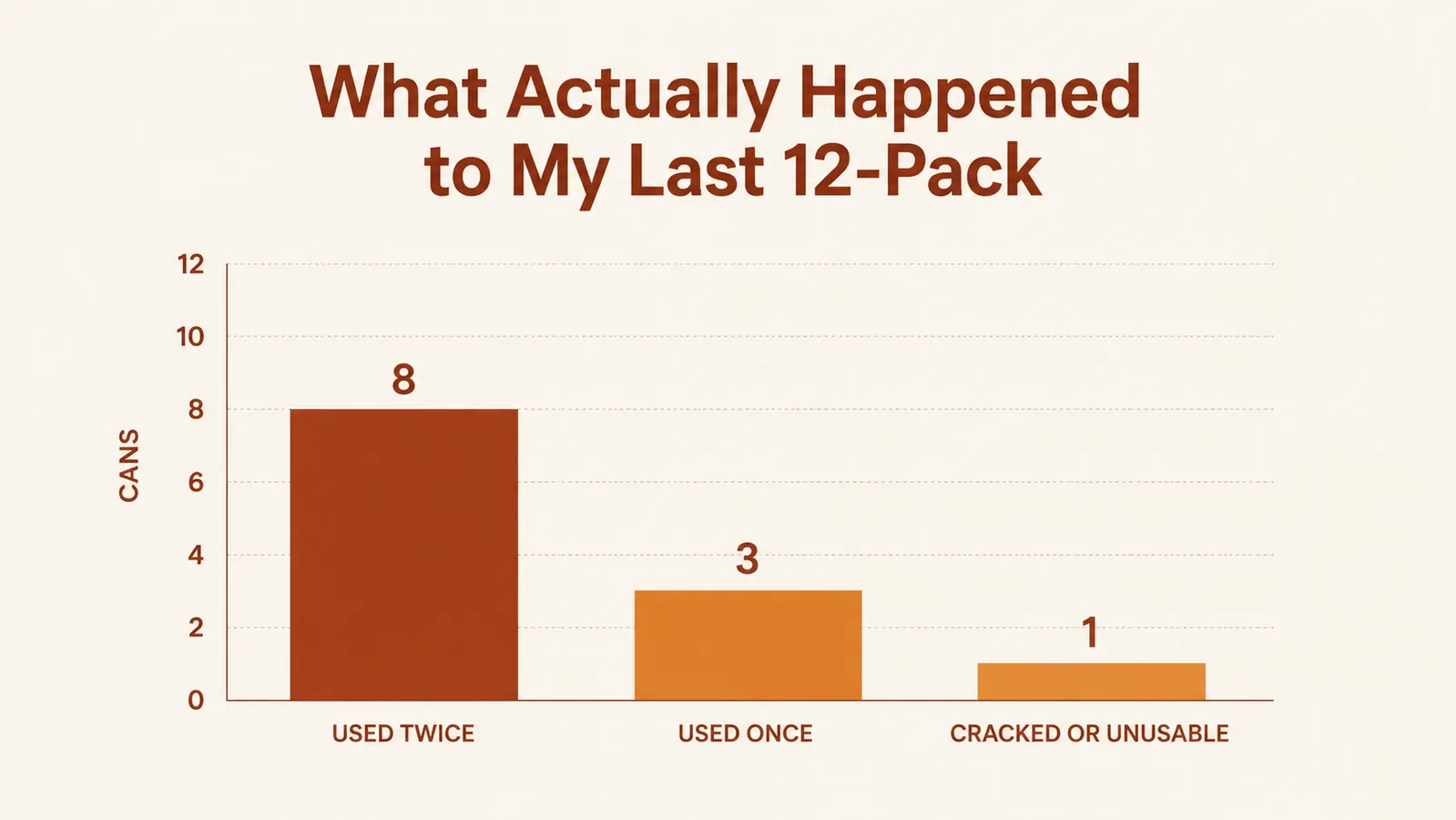
This is the math nobody does for you before you buy. A 12-pack sounds like a lot until you realize most planks are one-and-done. The edges char, the surface gets a little brittle, and by the second use it's cracking down the middle more often than not. I'd say out of a 12-pack, I get a second use out of maybe three or four planks if I'm careful and the first cook was gentle, kept over indirect heat with the lid mostly closed. The rest go in the fire pit after one salmon dinner, and I've made peace with that, but it surprised me the first few times.
That changes the actual cost math compared to what the packaging implies. If you're cooking salmon for the family every other Sunday, a 12-pack lasts you a little over a month, not a whole grilling season like I initially assumed when I bought my first box. I keep two packs in the pantry now so I'm never caught without one on a Saturday morning grocery run, because the one time I ran out mid-season, the only planks the local grocery store had were double the price and half the thickness.
The Warping Nobody Warns You About
Cedar cups and warps when it heats up, that's just wood behaving like wood. What surprised me is how much it warps, sometimes enough that the corners lift a full inch off the grate while the middle stays flat, and your fish can end up sliding toward the low side of the plank if you're not paying attention. I've lost a piece of salmon skin to the grate this way, sliding right off the raised edge of a warped plank while I was distracted talking to a guest. Now I check the plank's shape halfway through the cook and nudge it back to level with my tongs if it's cupped too much on one side.
The Grill Gourmet planks warp a bit less aggressively than a couple of cheaper packs I tried early on, probably because the boards are a consistent, slightly thicker cut, but they still warp. If you're the type who wants a completely predictable, flat cooking surface every time, this isn't quite that. It's rustic by nature, and you have to make peace with a little unpredictability in exchange for the flavor.
The Smoke Flavor Is Real, But It's Subtler Than You'd Guess
I'll be honest, the first time I used a cedar plank I expected something closer to a full smoker session, like what you'd get off a stick burner. That's not what happens. What you actually get is a gentle, almost sweet wood note that sits underneath the fish rather than dominating it. It's noticeably different from foil-wrapped salmon, and my mother-in-law, who notices everything, commented on it unprompted the first time I served it. But if you're expecting a heavy smoke ring or an intense campfire taste, you'll be a little let down, and I was too, until I recalibrated what I was actually expecting from the thing.
The flavor also fades fast. Salmon straight off the plank tastes noticeably different than salmon that sat for 20 minutes while everyone finished their potato salad. If the cedar flavor is the whole point for you, serve it hot, right off the grill, not after it's rested under foil on the counter. I've started plating the fish the second it comes off now instead of letting it rest with the sides, which meant rearranging how I time the whole meal around it.
Cleanup Is Easier Than People Expect, Cost Is Harder
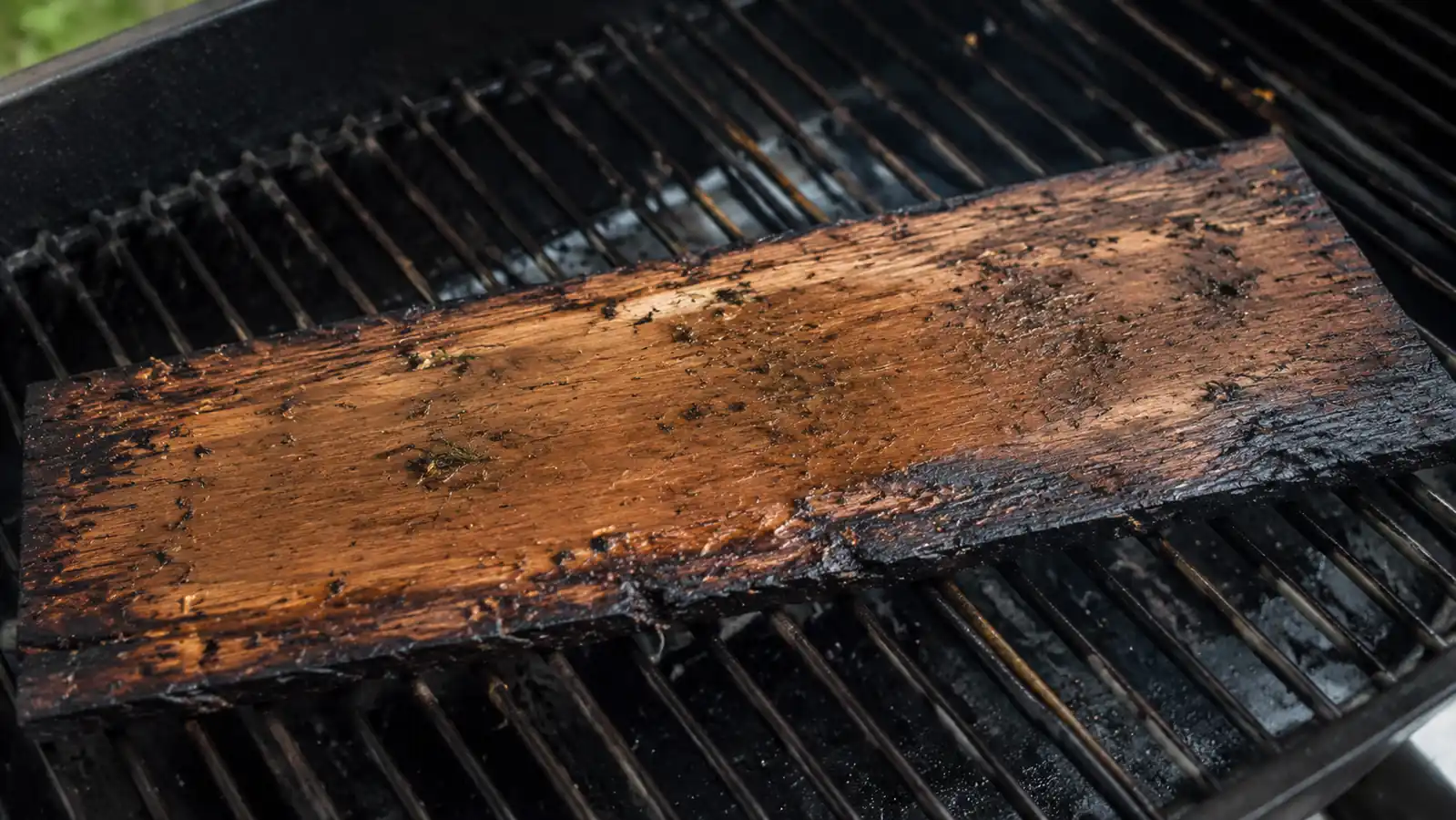
Here's a pleasant surprise nobody mentioned either: cleanup is genuinely easy. A charred plank just goes straight into the fire pit or the trash, no scrubbing, no soaking a pan, no scraping off stuck-on fish skin. Compared to a cast iron skillet or a grill basket, this is the lowest-maintenance salmon method I've used, and after a long cookout day that counts for something. My back has thanked me plenty of times for a cleanup that takes ten seconds.
The cost side is where the math gets less flattering than I expected going in. Once you account for the planks that only survive one use, and the ones that crack in the soak before they ever touch heat, the real cost per serving lands noticeably higher than the per-plank price on the box suggests. I still think it's worth it for a special dinner or a reunion where presentation matters, but if you're grilling salmon three or four nights a week, the planks add up faster than foil ever will. I budget for that now instead of being caught off guard by how quickly a pack disappears.
What I Liked
- Genuine, subtle smoke flavor that beats foil packets for salmon and trout
- USA-made cedar in the Grill Gourmet pack, consistent thickness plank to plank
- Doubles as a nice presentation piece straight off the grill onto the table
- Works on gas, charcoal, or a pellet grill without any special equipment
Where It Falls Short
- Soaking takes longer than the package suggests, plan for 2+ hours or overnight
- Real fire risk if you skip two-zone setup or walk away from the grill
- Mostly single-use despite the pack size, cost per meal is higher than it first appears
- Flavor is subtle and fades quickly once the fish comes off the heat
- Planks warp and cup with heat, occasionally enough to tilt food toward one edge
Nobody mentioned that half the pack goes in the fire pit after one dinner. I found that out the hard way, plank by plank.
Who This Is Actually For
If you cook salmon or trout even once every couple of weeks and you want something more interesting than foil, this earns its spot in your pantry. It's also genuinely good for a dinner where you want a little bit of a show, sliding a smoking plank straight to the table gets a reaction every time, and reactions are half the reason people host cookouts in the first place. If you're the kind of cook who plans meals a day out anyway, the soaking requirement won't feel like a chore, it'll just fold into your normal routine.
Who Should Skip It
If you're not someone who plans meals more than an hour ahead, the soaking requirement alone will frustrate you into giving up on these. And if you want a strong, heavy smoke flavor, you'll be happier with an actual smoker or a smoke tube. Cedar planks are a specific, gentle tool for a specific job, not a general-purpose smoking solution, and if you're hoping this replaces a real smoker setup, it won't come close. It's a weekend-dinner tool for people who already like planning their meal a little in advance, not a shortcut for people who decide what's for dinner an hour before the grill gets lit.
One more honest note: if anyone in your household has a sensitivity to wood smoke, even the mild kind these planks produce can bother them more than you'd guess, especially in an enclosed patio or a garage with the door half down. I found that out when my brother-in-law, who's fine around a regular grill, started coughing near mine on a still, humid evening. It's not a dealbreaker for most people, but it's worth testing on a well-ventilated night before you build a whole dinner party around it.
If salmon is on your menu this weekend
Give yourself the head start I didn't have the first time. Grab a pack, soak it overnight, and check today's price on the Grill Gourmet cedar planks on Amazon.
Amazon Check Today's Price on Amazon →