

My wife Renee doesn't ask for much, but every June she asks for salmon off the cedar plank, and I've learned not to mess with a good thing. Last May I picked up a 12-pack of the Grill Gourmet cedar grilling planks after my old dried-out stack from three summers back finally gave up the ghost, cracking and splitting the second I tried to soak them. I went through that whole pack, plus a second one I ordered in July when my sister-in-law's family showed up for two weeks, and I want to tell you exactly what a full season of real use looks like, not just what the box says.
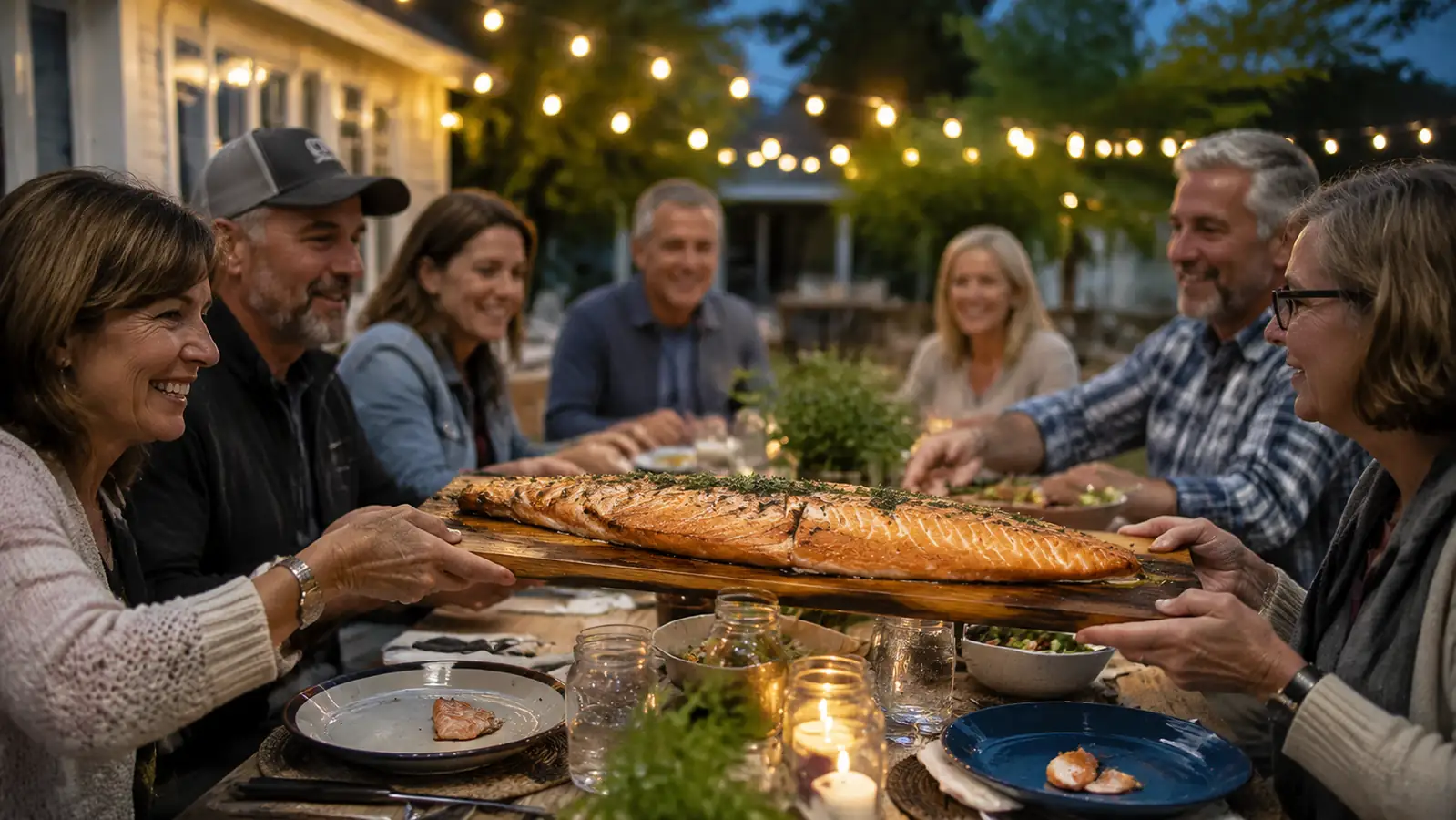
This isn't a first-impressions review. This is what happened after roughly eighteen separate cookouts, three of them for more than a dozen people, one of them a genuine family reunion with folding tables lined up in the backyard. That reunion alone put four planks on the grill at once, and by the end of the night there wasn't a scrap of salmon left on any of them, which told me more about how these held up under real pressure than any single quiet Tuesday dinner could have.
The Quick Verdict
A real, honest way to get smoky, moist grilled salmon without a smoker, as long as you respect the soak time and don't expect the same plank to work forever.
Amazon Check Today's Price →Tired of dry, flavorless grilled salmon? This is the fix that's been sitting in the lumber aisle the whole time.
Check today's price on the Grill Gourmet cedar planks and see why a 12-pack lasted me an entire grilling season.
Amazon Check Today's Price on Amazon →How I've Used It
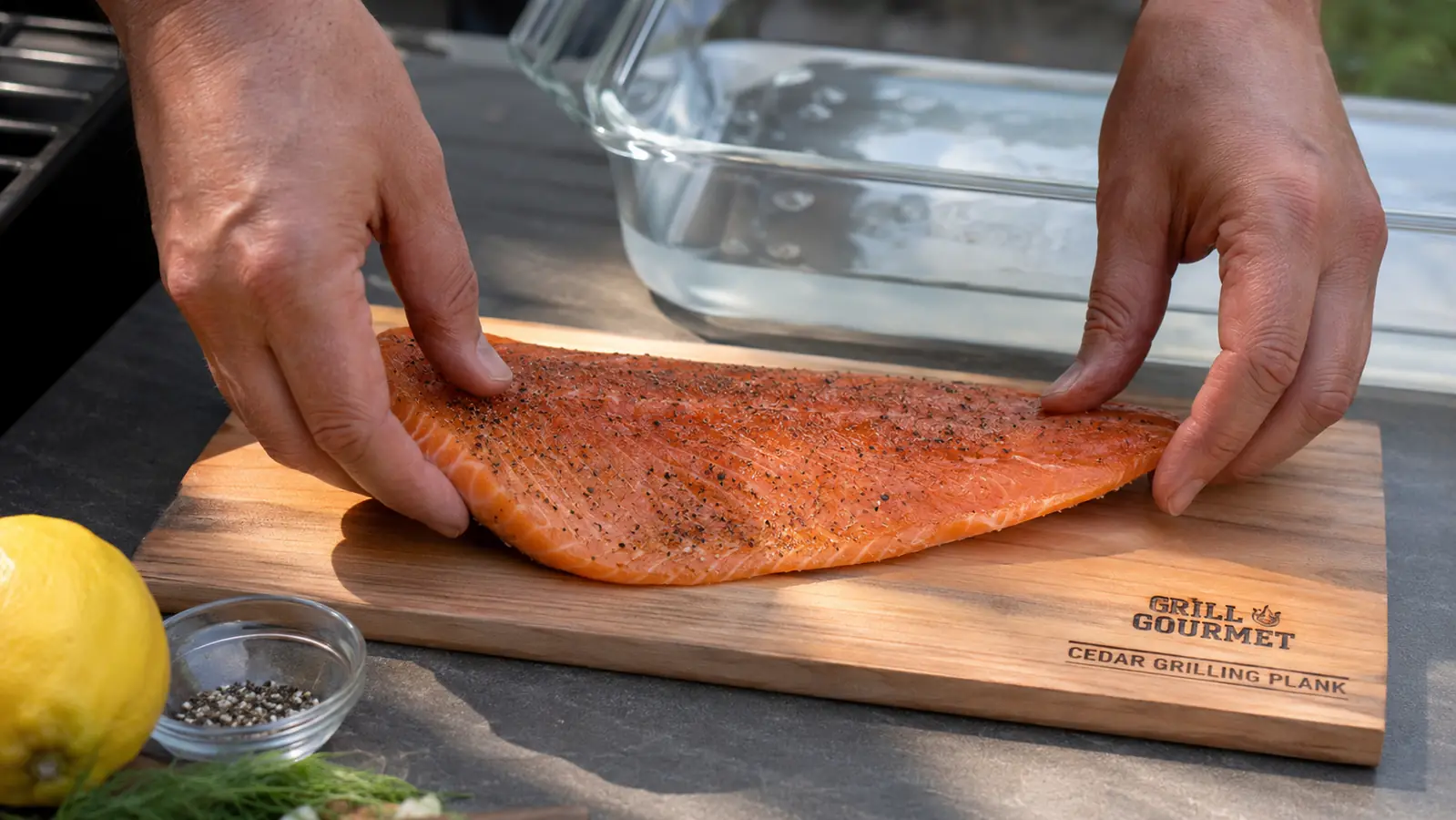
My routine is pretty simple by now. I fill a big roasting pan with water, weigh the plank down with a couple of soup cans so it doesn't float, and let it soak for at least an hour before it ever sees the grill. The instructions say a minimum soak time, but I've found the planks that got a good ninety minutes to two hours in the water held up noticeably better and threw off steady smoke instead of catching a hot spot and flaring.
From there it's straight onto my kettle grill, indirect heat, coals banked to one side, plank on the cool side with the lid down. Salmon goes skin-side down right on the wood once the plank starts to smoke a little at the edges. I don't flip it. I don't touch it. Fifteen to eighteen minutes depending on the thickness of the fillet, and I pull it when the flesh just starts to flake.
I've cooked everything from a single 1-pound fillet for a Tuesday dinner to four planks going at once for that reunion crowd. The planks are a decent size, big enough for one standard fillet with a little room on the edges, and I never once had a plank actually catch fire and burn through, even on nights I got distracted helping my grandson Eli with his bike.
I keep a stack of unsoaked planks in a dry spot in the garage, away from any humidity, because a plank that absorbs moisture from the air before you're ready for it soaks unevenly. Between uses I just rinse with hot water, no soap, and stand them up against the fence to air dry for a full day before they go back in the stack.
The Smoke Flavor Is the Whole Point, and It Delivers
I've tried grilling salmon straight on the grate, in foil packets, and on cheaper off-brand planks from a hardware store bargain bin. None of them come close to what real cedar does. The smoke that comes off these planks is sweet and a little resinous, nothing like the sharp bite of mesquite or hickory. It's gentler, and it's exactly right for fish, which can get overwhelmed by heavier smoke woods fast.
What surprised me is how much the plank protects the fish from direct heat while still letting that smoke soak in. My salmon comes off moist every time, not the dried-out, chalky texture you get when it sits right on hot grates too long. The skin practically welds itself to the wood, which sounds like a problem but actually makes serving easier since you can lift the fillet off clean and leave the skin behind on the plank.
I did a side-by-side one Saturday, half the fillet on the plank and half straight on the grate, just to see if I was fooling myself. Renee and my daughter Ashley both picked the plank half blind, no hesitation. That settled it for me.
How the Planks Held Up Cookout After Cookout
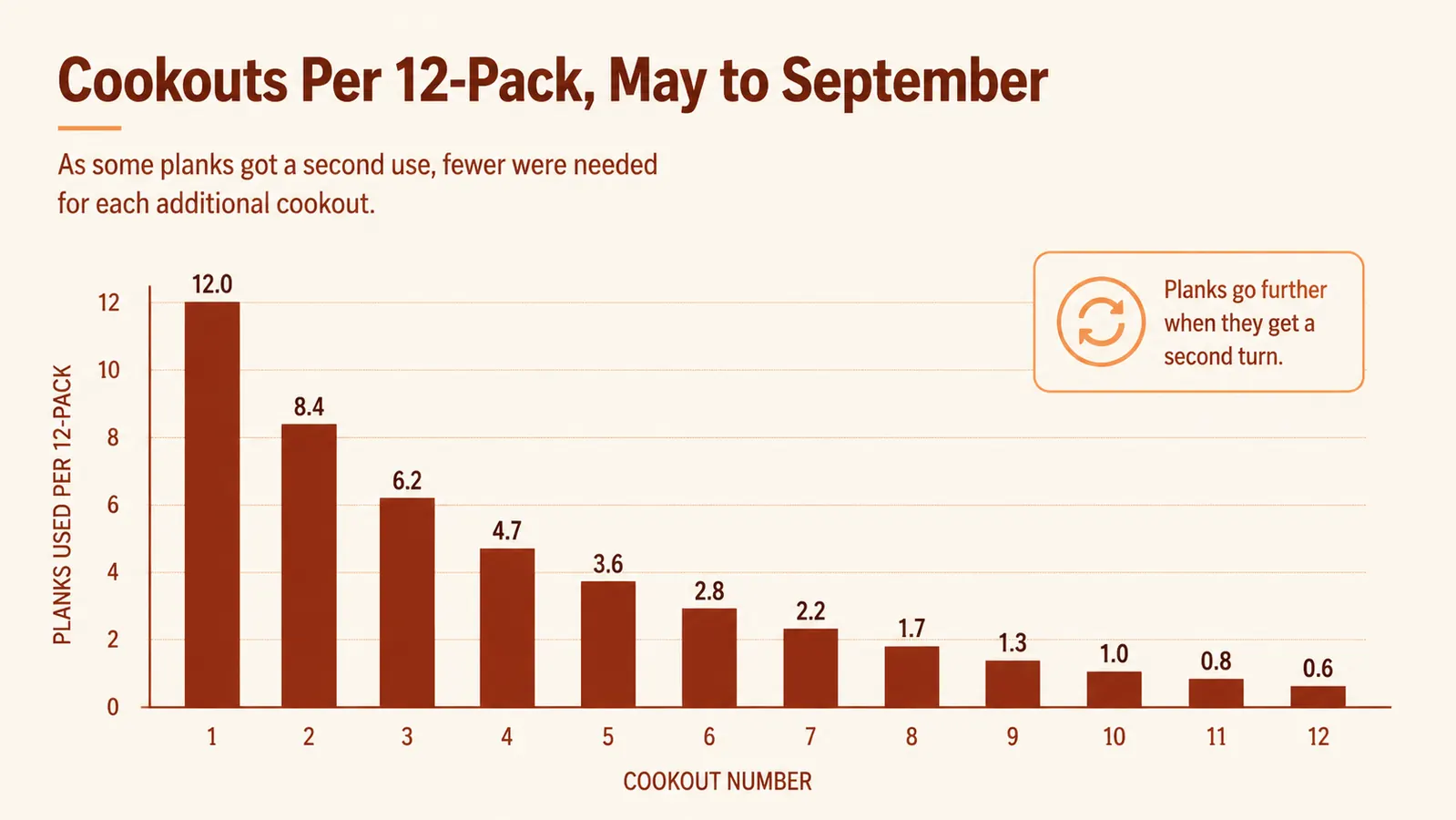
A 12-pack sounds like a lot until you're grilling salmon every week or two all summer. I went through the first pack in about nine cookouts, because I was still figuring out that some planks can genuinely go twice if you don't scorch them too badly the first round. By August I'd gotten good enough at managing the heat that I was stretching a few planks to a second use, scrubbing them down with hot water and a stiff brush, no soap, and letting them dry a full day before the next soak.
The wood itself is thicker than the bargain-bin planks I used a couple years back, which matters more than you'd think. Thin planks warp and crack after one soak-and-grill cycle. These held their shape through two uses more often than not, and only a couple actually split down the grain, both times on nights I ran my grill hotter than I should have because I was rushing to get dinner on the table before a thunderstorm rolled in.
By the end of the season I had gone through both 12-packs, twenty-four planks total, across roughly eighteen cookouts. That's a realistic number for anyone doing salmon regularly through a Southern summer, not the fantasy math you sometimes see where one pack lasts you all year. Broken down per cookout, that's a couple dollars in wood for a dinner that would've cost a lot more if I'd bought that same salmon already smoked at the grocery counter.
It's Not Just for Salmon
I started out buying these strictly for salmon, but by July I was using them for other things too. Shrimp skewers laid across a plank pick up that same sweet smoke without falling through the grates. I did a plank of asparagus and thin-sliced zucchini as a side dish for the reunion, and it turned out better than I expected, though vegetables cook faster than fish so you have to watch them closer.
I even tried a small pork tenderloin on one, low and slow with the lid down, and while it's not going to replace my smoker for a full brisket or pork shoulder, it added a nice cedar note to a weeknight dinner that would've otherwise just been grilled plain. If you're someone who cooks fish once a year, you probably don't need two dozen of these. If you're grilling salmon or shrimp regularly through the summer the way my family does, the versatility adds up fast.
The one thing I'd warn you about is using the same plank back to back for very different foods. A plank that's carried a heavily seasoned pork tenderloin will pass a little of that char and seasoning along to whatever goes on it next, so I keep a mental note of what each plank has cooked and try to pair salmon with salmon, at least for the second use.
What I Considered Before Buying These
Before I settled on this pack I looked hard at a couple of other routes. A grill-top smoker box with wood chips was one option, and I still use mine for ribs and chicken, but it doesn't do the same thing for fish. Chips in a box smoke the air around the food, while a plank puts the wood right underneath the fillet, and for something as delicate as salmon that direct contact makes a real difference in how much smoke actually reaches the meat.
I also considered just sticking with foil packets, which is what I did for years before I got serious about plank grilling. Foil is faster and there's no soak time, but you lose the smoke entirely, and the fish steams more than it grills. My daughter-in-law swears by foil for weeknights when she's short on time, and honestly, that's a fair trade for a Tuesday. It's just not the same finished product you get off cedar.
As for cheaper planks, I'd already learned my lesson with the hardware store bargain bin stack that warped and split on me. These Grill Gourmet planks cost a little more per plank than the thinnest options out there, but the extra thickness paid for itself in planks that actually survived a second use instead of falling apart after one cookout.
Where It Falls Short
I won't pretend this is a perfect product. The soak time is a real commitment. If you forget to start soaking early and try to shortcut it, you will get a plank that catches fire faster than you'd like, and I scorched one dinner in June learning that lesson the hard way. This is not a spontaneous, thirty-minutes-to-dinner tool unless you plan ahead.
The planks also aren't reusable indefinitely no matter how careful you are. A few sites and sellers make it sound like you can use one plank all summer long, and that just hasn't been my experience. Once the wood gets a good char and starts to crack along the grain, it's done, and trying to squeeze a third use out of one usually means uneven smoke and a plank that falls apart when you try to lift the fish off it.
What I Liked
- Genuine, mellow cedar smoke flavor that beats foil packets and bare grates
- Thick enough wood to survive a second use if you manage your heat
- Keeps salmon moist even on a hot summer evening cookout
- Works well beyond salmon, shrimp and vegetables both did well
- Made in the USA, no weird chemical smell when soaking
Where It Falls Short
- Requires real soak time, no good shortcut for a last-minute dinner
- A few planks split early if the grill runs too hot
- Not truly reusable more than once or twice, despite what some sellers imply
- You'll go through a 12-pack faster than expected if you grill fish weekly
The plank isn't magic. It's just doing the one thing a bare grill grate can't, protecting the fish while still letting real wood smoke soak in, and that's worth the extra hour of soak time to me.
Who This Is For
If you grill salmon, trout, or shrimp more than a couple times a month, these are worth having in the garage. They're also a nice touch for a reunion or potluck where you want the food to feel a little special without turning it into a whole production. Anyone who already plans their cookouts a day ahead, the way I do when Renee tells me Sunday dinner needs to be salmon, will get the most out of these. I'd also point it toward anyone tired of paying restaurant prices for cedar-plank salmon at a seafood place, because once you've got the routine down, doing it at home on your own grill is genuinely not much harder.
Who Should Skip It
If you're the type who decides what's for dinner twenty minutes before you cook it, the soak time alone will frustrate you. And if you only grill fish once or twice a year, buying a 12-pack is more than you need. A couple of individual planks from the grocery store will cover you just fine. Same goes if you're working with a small tabletop gas grill with limited indirect heat space, since these planks really do want that cooler zone away from direct flame to work the way they're supposed to.
A whole season of better salmon dinners starts with one soak and one plank.
See today's price on the Grill Gourmet cedar planks and grab a pack before your next cookout.
Amazon Check Today's Price on Amazon →