
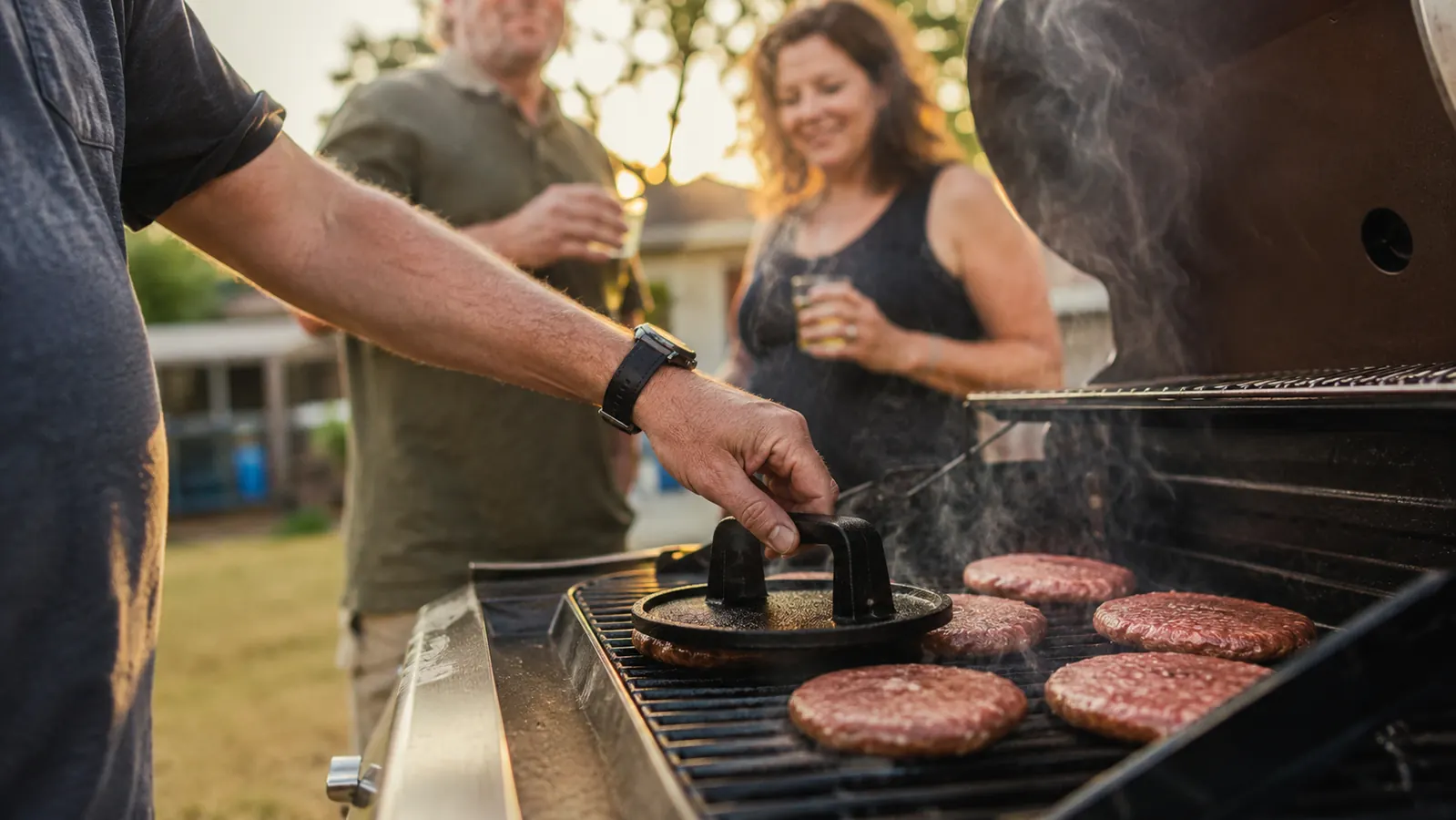
I bought this cast iron press two summers ago because my smash burgers weren't smashing right. I was using the bottom of a mason jar wrapped in foil, and half the time the patty stuck to the glass instead of the griddle. My grandson Tyler, who was ten at the time, kept asking why Pop-Pop's burgers didn't look like the ones on YouTube. That's a fair question from a ten-year-old, and it sent me down a rabbit hole that ended with this Cuisinart press showing up on my porch two days later.
Two grilling seasons and, by my rough count, somewhere north of 60 uses later, I still reach for it almost every Friday burger night and every reunion cookout my family throws. That doesn't mean it's perfect. It's heavy, it's a little awkward to store, and the nonstick coating has faded some. But it earned its spot in my grill caddy, and I want to walk you through exactly why.
The Quick Verdict
A genuinely well-made cast iron press that delivers real smash burger crust and flattens bacon better than any trick I tried before it. Not flashy, just heavy metal that does its job.
Amazon Check Today's Price →Tired of smash burgers that won't smash right?
A wobbly spatula and a wrapped brick only get you so far. This is the tool that actually presses even, edge-to-edge crust every single time.
Amazon Check Today's Price on Amazon →How I've Used It
My routine is simple and it hasn't changed much in two years. I preheat my flat-top griddle attachment on the gas grill until a drop of water skitters across it, drop a two-ounce ball of 80/20 ground chuck on the surface, and press straight down with this for about ten seconds. I do this in batches of four to six patties at a time, because that's what feeds my family of five plus whoever else wanders over on a Friday night.
Beyond burgers, I've used it on bacon more times than I can count, mostly because my wife Carla got tired of bacon that curled up like a potato chip in the skillet. I've also used it to weigh down a butterflied chicken thigh on the grill and, once, to flatten a grilled cheese on the griddle for my youngest daughter when she was home from college. It's not a one-trick tool, even though smash burgers are what it does best.
I've hauled this Cuisinart press to three family reunions, more church potlucks than I can list, and it lives in my grill caddy the rest of the time, sitting next to my spatula and tongs. It's seen rain, it's seen 95-degree Texas afternoons, and it's been dropped on my concrete patio at least twice without cracking.
The reunion that really tested it was the Fourth of July cookout two summers back, when we had close to twenty-two people counting cousins and their kids, and I stood at the griddle for almost two hours straight pressing batch after batch of patties. That's the kind of stretch where a flimsy tool shows its weakness fast, whether it's a handle coming loose or a coating that starts flaking into the food. This one just kept going, batch after batch, without a single hiccup, and by the end of the night my arm was more tired than the press was.
The Cast Iron and the Weight That Actually Makes It Work
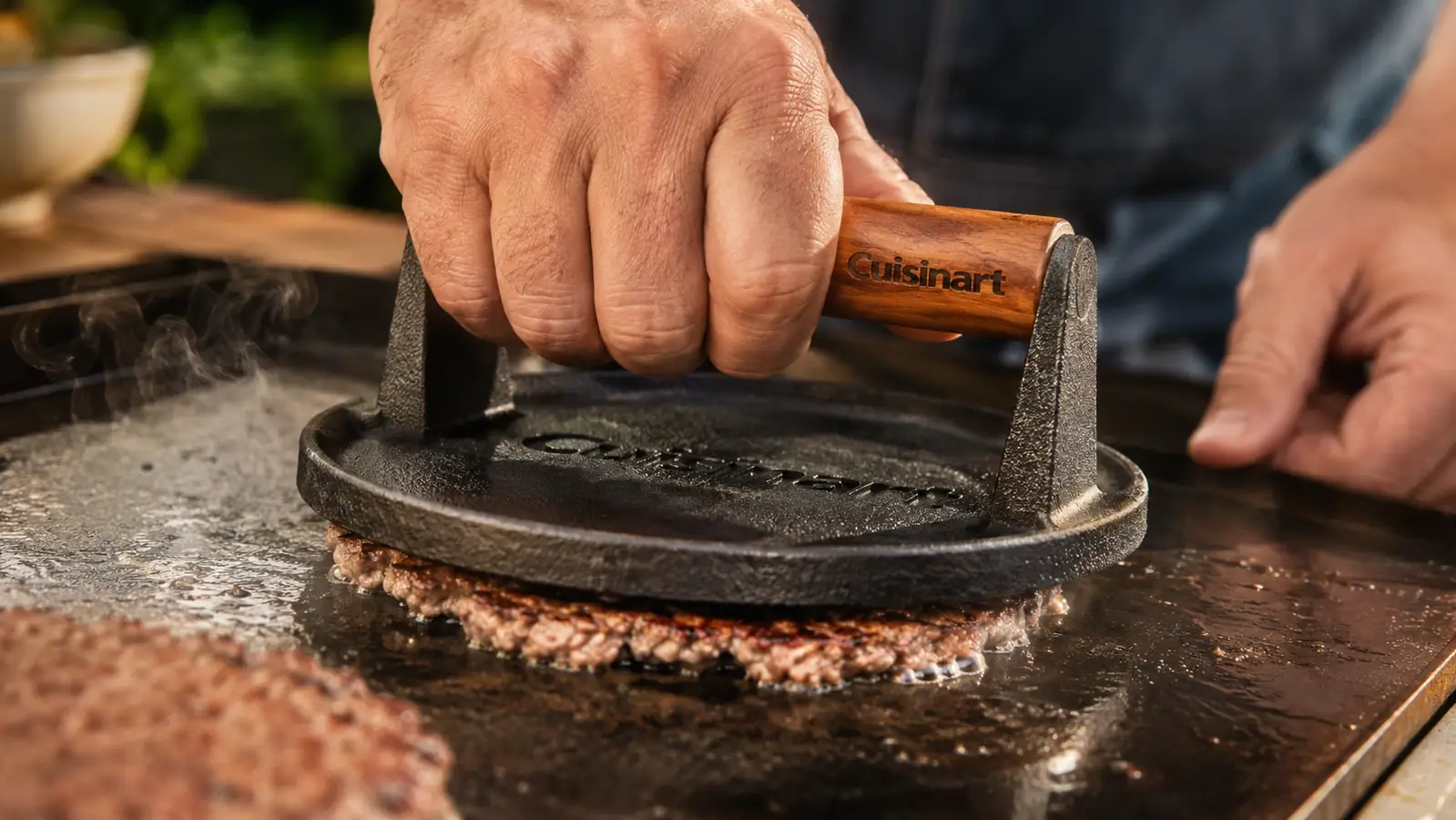
This Cuisinart press weighs a little over two pounds, and that weight is the entire point. A smash burger needs hard, even downward force to push the meat into full contact with a hot surface so you get that lacy, caramelized crust all the way to the edges. A plastic spatula just can't deliver that kind of pressure evenly, no matter how hard you lean into it. The cast iron plate here does the work for you, so the crust comes out consistent whether Tyler is helping me flip or I'm doing it solo.
The plate itself is a rectangle, roughly 7.5 by 5.5 inches, with a light nonstick coating baked onto the cast iron. That coating was a pleasant surprise the first time I used it. Straight cast iron with no coating at all tends to stick unless you've seasoned it religiously, and I don't always have the patience for that. This one releases cleanly from patties about 90 percent of the time, which is good enough for a guy cooking for a crowd, not a competition.
The wooden handle is the other detail worth mentioning. It stays cool enough to grip bare-handed for the first minute or two near the grill, though I'd be lying if I said it never got warm after repeated presses in a row. On a hot July day doing six burgers back to back, I've had to switch to an oven mitt by the fourth or fifth patty. That's not a dealbreaker, just something to plan for.
Two Summers of Smash Burgers, Bacon, and More
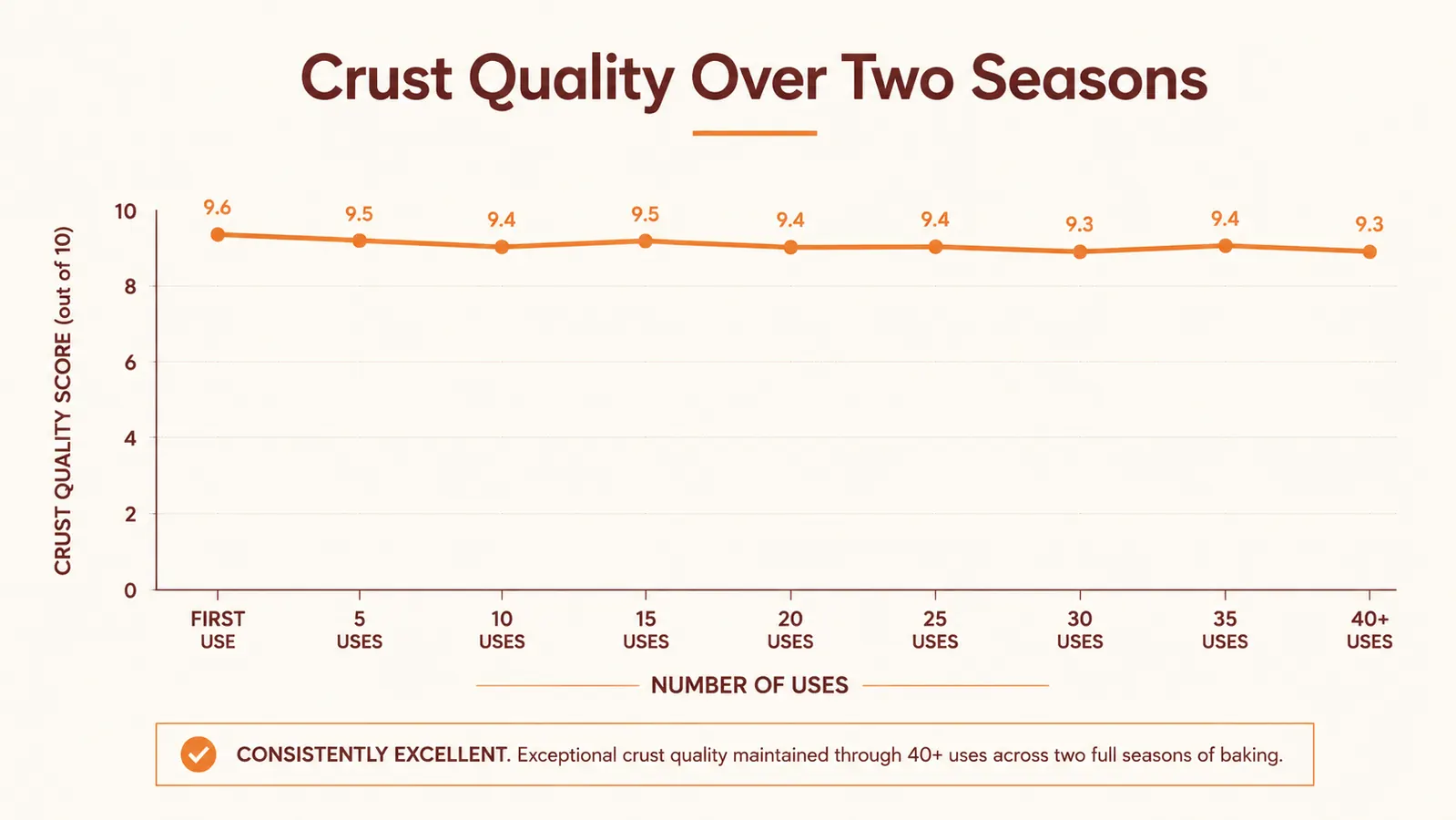
The real test of any kitchen or grill tool isn't how it performs the first week, it's how it performs after you've forgotten it's even a review item and it's just part of your routine. This press passed that test for me. The nonstick coating has dulled in color, going from a shiny black to more of a matte charcoal, but it hasn't flaked or chipped, and food still releases about as well as it did on day one.
Where it's really shined is bacon. I lay four strips on the griddle, press down with this for the first two minutes, then let them finish without it. The result is flat, evenly crisp bacon with none of that curled, half-raw center you get when strips shrink unevenly. Carla noticed the difference before I even pointed it out, which is how I know it wasn't just me talking myself into liking this thing.
The one spot where performance has dipped slightly is with really fatty ground beef, anything over 20 percent fat content. The extra grease pools around the edges of the press and I have to dab it up with a paper towel between patties or it starts smoking more than I'd like. It's a minor annoyance, not a real flaw, but it's the kind of thing you only notice after dozens of uses, not the first week.
Cleaning and Care After Two Seasons
I want to be straight with you about upkeep, because a lot of reviews skip right past it. I never put this in the dishwasher. I wash it by hand with warm water and a soft brush, dry it right away with a dish towel, and set it near the stove until it's completely dry before putting it away. Any moisture left sitting on exposed cast iron edges will start to show orange rust spots within a day or two in humid weather, and I learned that the hard way the first month I had it.
About every couple of months I'll rub a thin layer of plain vegetable oil into the back and edges of the plate with a paper towel, the same way I'd re-season a cast iron skillet. It takes maybe ninety seconds and it's kept the metal looking respectable two seasons in, with no pitting or flaking anywhere on the cooking surface. If you already own cast iron cookware, this routine will feel familiar. If you don't, it's a small habit to build, but it's not optional if you want this thing to last.
The Tradeoffs I've Made Peace With
Nothing is perfect, and I'd rather tell you the annoying parts than pretend this press is flawless. First, it's heavy enough that it's not fun to pack for a picnic or camping trip. I leave it at home for anything more than a five-minute drive because two pounds of cast iron adds up fast in a cooler bag already full of ice and meat.
Second, cleanup takes a little more thought than a plastic spatula. I hand wash it, dry it immediately, and every few months I'll rub a thin coat of oil into the cast iron backing to keep any exposed metal from rusting. It's not hard, but it's one more thing on a checklist, and if you're not someone who already tends to cast iron skillets, this might feel like an extra chore.
Third, the single size means it's built for burgers and similar flat foods, not for pressing something like a whole spatchcocked chicken evenly. I still use a separate brick for that job when I need more surface area. If you're looking for one tool to do everything, this isn't it, and I'd rather tell you that now than have you disappointed later.

What I Tried Before This
Before I bought this Cuisinart press, I went through the usual home cook workarounds. The foil-wrapped brick trick works in a pinch, and I'll admit it presses just as hard if you find a brick the right size. But it's messy, the foil tears eventually, and you can't exactly toss a brick in the dishwasher or store it in your grill caddy without it looking like a construction site accessory.
I also tried a cheap stamped-steel burger press with a spring-loaded plunger, the kind sold for making uniform patties before cooking. That one was a waste of money for me. It was too light to do any real smashing on the grill, and the nonstick coating peeled within a month. This cast iron press has outlasted it by more than a year and shows no signs of quitting.
My neighbor across the street swears by a plain uncoated cast iron press he inherited from his father, no nonstick coating at all, just bare seasoned iron. It works fine for him because he's been seasoning cast iron for thirty years and doesn't mind the extra care. For someone who wants good results without turning burger night into a cast iron maintenance seminar, I still think the light nonstick coating on this one strikes the better balance.
What I Liked
- Heavy cast iron gives real, even smashing pressure without arm fatigue
- Nonstick coating releases patties and bacon cleanly for the vast majority of uses
- Wooden handle stays reasonably cool for the first several presses
- Sturdy build has survived two seasons and a couple of patio drops
- Doubles for bacon, grilled cheese, and pressing thin cutlets
Where It Falls Short
- Handle heats up after four or five presses in a row on a hot day
- Heavy enough that it's not ideal for camping or picnics
- Needs occasional hand-oiling on the exposed cast iron edges to prevent rust
- Struggles with excess grease pooling from fattier ground beef
- One fixed size, not suited to pressing larger cuts of meat
My grandson stopped asking why my burgers didn't look like the ones online about a week after this showed up. That's the whole review, really.
Who This Is For
If you make smash burgers more than once or twice a summer, this is worth having. It's also a good fit if you're the designated bacon cook in your house and you're tired of curled, unevenly cooked strips, or if you host reunions and potlucks where you're cooking a dozen or more burgers back to back and need something that holds up to repeat use without babying it. It's also a solid pick for anyone who already owns cast iron skillets and isn't fazed by a little routine maintenance.
Who Should Skip It
If you rarely make burgers at home, or you mostly grill whole cuts like steaks and chicken breasts, you probably don't need this in your toolkit. It's also not the right pick if weight and packability matter to you, say for tailgating or camping trips, where a lighter tool or the old foil-brick trick might serve you better. And if the idea of hand washing and occasionally oiling a piece of cookware sounds like more trouble than it's worth, you'll likely end up frustrated with any cast iron tool, this one included.
Two seasons in, this is still the tool I reach for on burger night
If your smash burgers have been coming out uneven, this is the fix that actually stuck around at my house.
Amazon Check Today's Price on Amazon →