
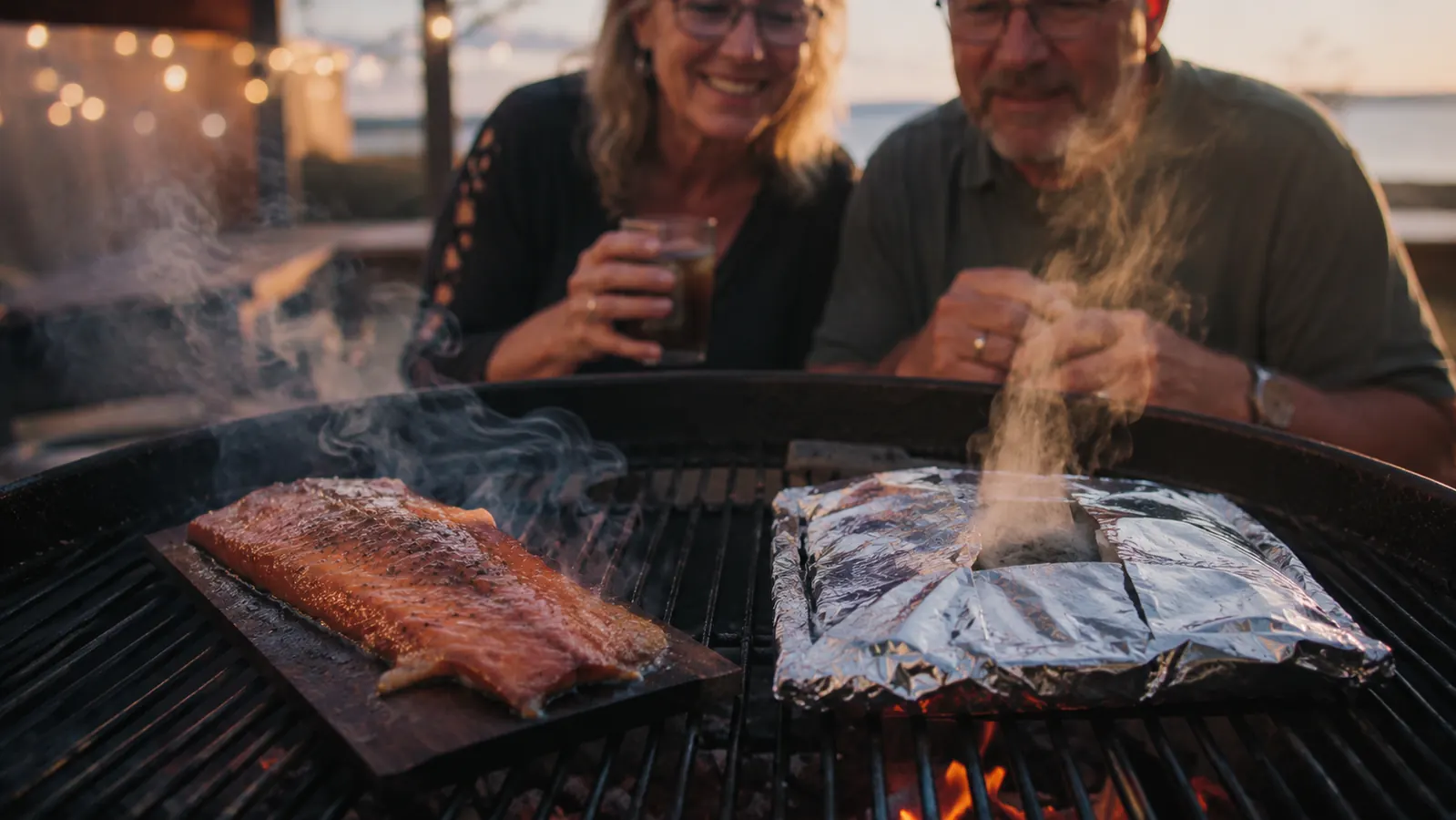
If you asked me straight up which one wins, cedar plank or foil packet, I'd tell you it depends on what you're after that night. But if you want the short answer before we get into the weeds: cedar planks give you more flavor, foil packets give you less mess and a faster turnaround. I've done both more Fridays than I can count, usually salmon from the counter at the grocery store in town, and I've landed on a clear favorite for most nights. Let me walk you through why.
I picked up my first pack of Grill Gourmet cedar planks a few summers back after my brother-in-law wouldn't shut up about how his salmon tasted like it came off a smoker. He was right. That first plank changed how I think about grilling fish. But foil packets earned their spot in my rotation too, especially on weeknights when I've got thirty minutes between getting home and everybody needing to eat.
Before I owned a single plank, foil was just what I did with salmon, same as I'd wrap a potato. It never occurred to me there was another way that didn't involve buying a whole smoker setup. Once I tried the plank method though, I understood why folks at the seafood counter kept mentioning it. It's a small change in method that makes a bigger difference than the price tag would suggest.
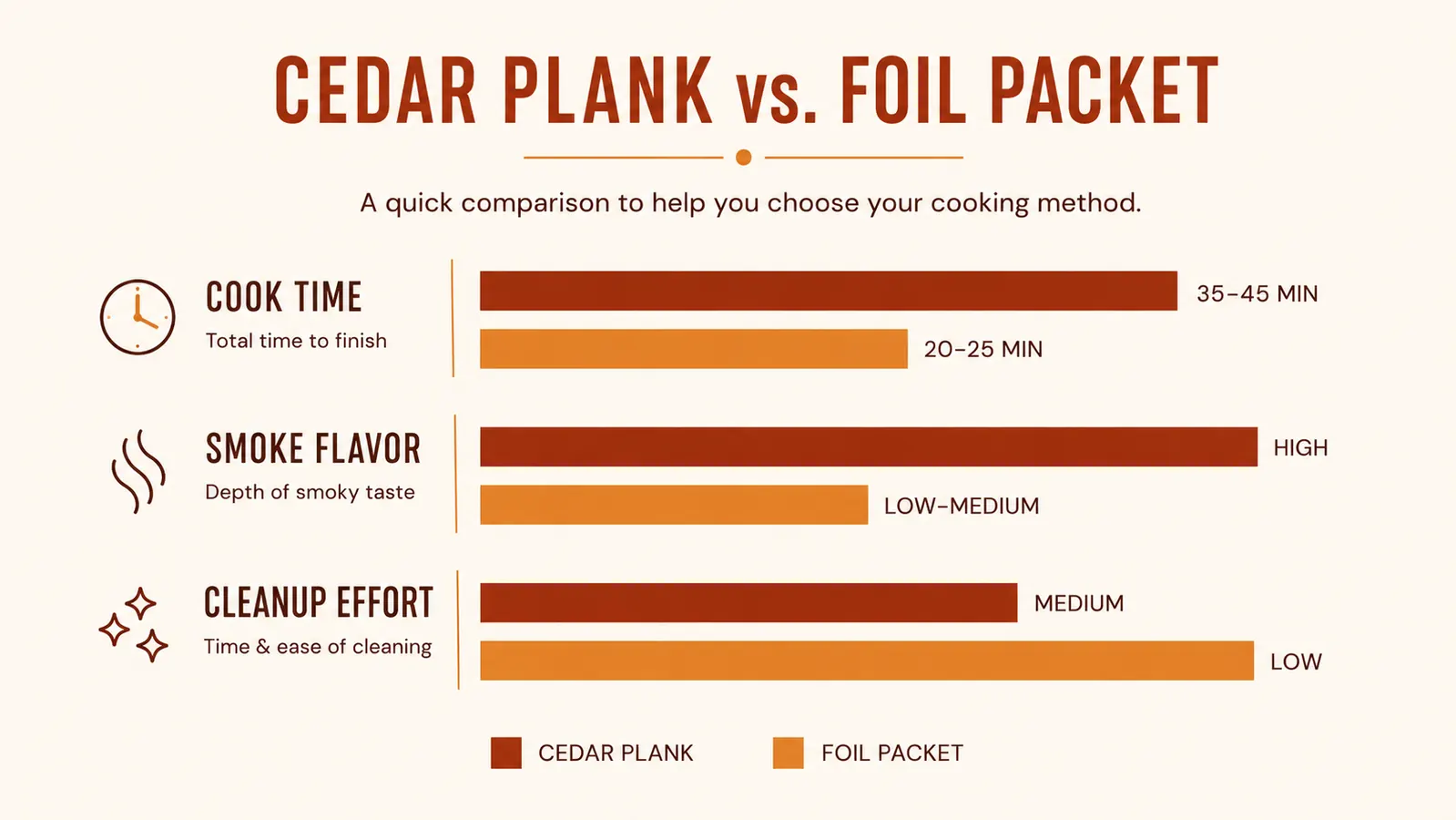
| Cedar Planks | Foil Packets | |
|---|---|---|
| Method | Cedar Grilling Plank | Aluminum Foil Packet |
| Smoke Flavor | Real cedar smoke soaks into the fish | None, just the grill's heat |
| Prep Time | Needs 1 hour soak in water first | Ready in under 5 minutes |
| Cook Time (avg fillet) | 14-18 minutes | 10-12 minutes |
| Cleanup | Plank tossed or reused once, some ash | Foil balled up and thrown away |
| Cost Per Use | About $1.40 per plank from a 12-pack | Pennies of foil per packet |
| Sticking Risk | Very low, plank acts as a barrier | Moderate if foil isn't oiled well |
| Best For | Weekend cookouts, company coming over | Fast weeknight dinners |
| Reusability | Can reuse a lightly charred plank once | Single use only |
How I Actually Tested This
This wasn't a one-night experiment. I ran both methods side by side on the same grill, same batch of salmon from the same trip to the store, on three separate weekends this spring. Same seasoning too, just salt, pepper, a little brown sugar, and a squeeze of lemon, so the only variable was the cooking method itself. I wanted to know if the flavor difference people talk about online was real or just marketing talk from folks selling cedar planks.
First round, I ran two fillets on the same grill at the same time, one on a soaked cedar plank on the left side, one wrapped in a foil packet on the right. Lid down the whole time, same internal temp target of 125 degrees for medium. My wife and my neighbor Tom did the taste test blind, no idea which was which. Both picked the plank fillet as having more depth, more of that outdoor cooked flavor. Neither one guessed wrong, which told me something.
I ran it again a second weekend with a thicker cut, closer to an inch and a half, just to make sure the results held with different fillet sizes. Same outcome. The plank fillet took a few extra minutes but the smoke flavor came through even stronger since there was more surface area touching the wood over a longer cook. Third weekend I tried a whole side of salmon rather than individual fillets, mostly to see if the plank would hold up under a bigger piece. It did, and the crowd at that cookout finished it before the burgers were even off the grill.
One thing worth mentioning if you're new to planking, don't skip the soak. I learned that the hard way early on, tossed a dry plank straight on the grill thinking I'd save time, and it caught a real flame within ten minutes instead of just smoking. A full hour submerged in water, weighted down with a plate so it doesn't float, keeps the wood smoking instead of burning outright. If you want more detail on the exact soak and cook times I use now, I wrote up the full step-by-step separately.
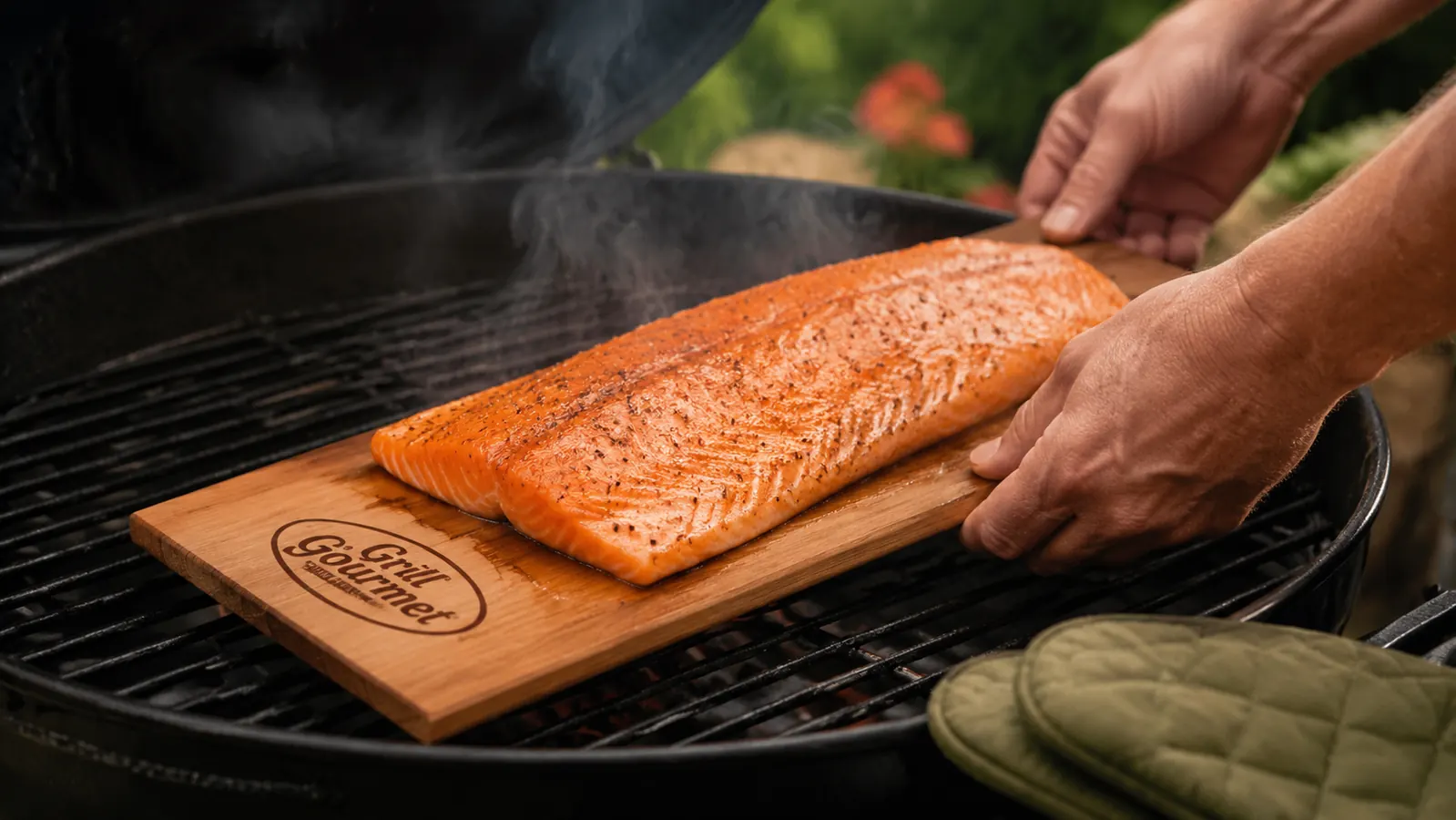
Where Cedar Planks Win
The flavor difference is not subtle. When that plank starts to smoke under the fish, the wood oils work into the flesh the whole time it's cooking. I've served plank salmon to my in-laws and had them ask if I'd smoked it overnight. I hadn't. It was fifteen minutes on a regular gas grill with the lid down, letting the cedar do the work. Foil just can't replicate that because there's no wood touching the food, no smoke getting trapped against the fillet.
There's also something about the presentation. I set the whole plank, char marks and all, right on the table when we've got company. It looks like I put in more effort than I actually did, and nobody needs to know the planks came twelve to a pack for under twenty dollars. My wife's cousin asked where I bought "that fancy smoker" once. I just smiled and passed the tartar sauce.
The other thing I didn't expect going in was how forgiving the plank is on texture. Because the wood sits between the fish and the direct flame, you get a gentler, more even heat than foil sometimes delivers. I've had foil packets where one side of the fillet ends up a little rubbery from sitting too close to a hot spot on the grate. That almost never happens with the plank in between.
There's also a trust factor with a name brand pack like Grill Gourmet. I've grabbed the bargain bin planks at a big box store before and had one crack right down the middle mid-cook, dumping half my dinner onto the burner. A thicker, made-in-USA plank just holds up better through a full cook, and after that incident I stopped shopping planks on price alone.
I'll admit there's a small learning curve either way. My first few foil packets leaked butter all over the grate because I didn't fold the seams tight enough, and my first plank fillet came out a touch underdone because I pulled it too early, worried about the smoke. Give either method two or three tries before you judge it. Both get easier fast once you've done it a couple times.
Where Foil Packets Win
Foil doesn't ask anything of you. No soaking, no waiting around for the wood to be ready. I rip off a sheet, drop the fillet on with some butter, lemon slices and a little garlic, fold it up, and it's on the grill in under five minutes. On a Tuesday after work with a hungry kid asking when dinner's ready, that matters more than smoke flavor.
Cleanup is where foil really pulls ahead too. I ball it up and toss it, no ash on the grill grates, no plank sitting in the sink soaking for next time. If you're grilling for one or two people and don't want to deal with the extra step of soaking wood, foil packets get the job done without complaint.
Foil also travels well if you're cooking at somebody else's place or out camping. You don't need to pack a bucket of water and remember to soak your plank the night before. Fold your ingredients into the packet at home, toss it in the cooler, and it's ready whenever the grill is hot. That kind of portability matters more than people give it credit for.
I'll also say foil is more forgiving for beginners. There's no wondering whether your plank soaked long enough or whether it's about to catch a real flame instead of just smoking. Fold it right, keep an eye on the heat, and it's hard to mess up a foil packet badly enough to ruin dinner.
Ready to add real smoke flavor without buying a smoker
Grill Gourmet's cedar planks come 12 to a pack, made in the USA from real cedar. Soak one tonight and see the difference on your next salmon dinner.
Amazon Check Today's Price on Amazon →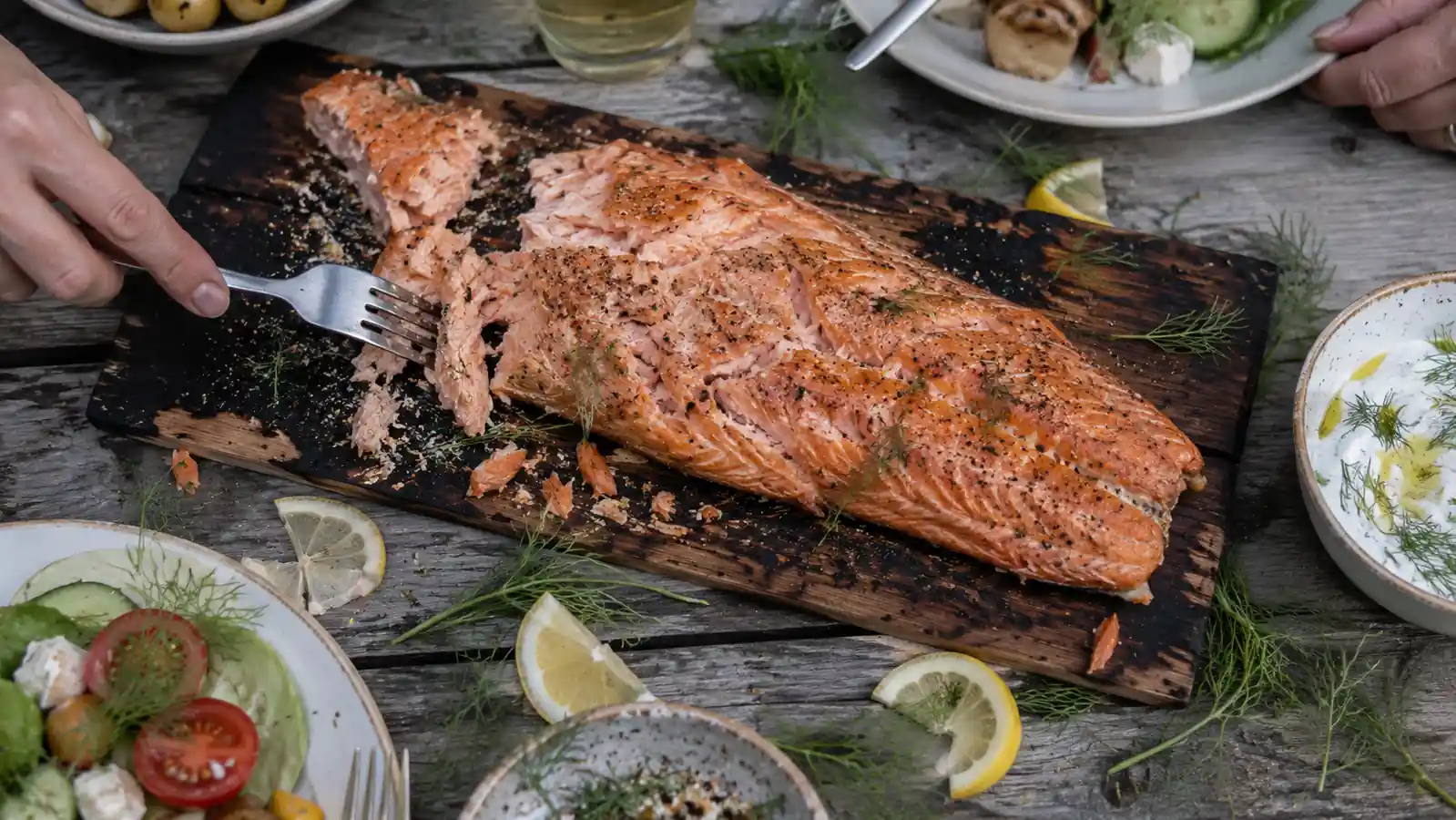
What Nobody Tells You About the Cost
People assume foil is automatically cheaper, and per use it usually is. But once you factor in that a 12-pack of planks runs you around sixteen to seventeen dollars at current pricing, that's roughly a dollar forty per fillet if you use a fresh plank each time. Some folks reuse a lightly charred plank once more before it cracks, which brings the cost down even further. Compare that to what you'd spend replacing a good grill brush or a bag of wood chips for a smoker, and cedar planks start looking like the cheap way to get that flavor rather than an expensive add-on.
Foil is still going to win on raw material cost, no argument there. But the gap is smaller than people expect, and once you weigh in the presentation factor, the plank often earns its keep on nights when you're trying to impress somebody at the table.
One more cost consideration worth mentioning, planks store flat in a cabinet or drawer for months without going bad, so buying the 12-pack up front doesn't mean rushing to use them all in one week. I've had planks sit in my pantry since spring and they cooked just as well in August as they would have in June.
Who Should Buy Which
If you're cooking for company, or it's a weekend and you've got time to soak a plank for an hour before dinner, go with cedar. It's the better choice when the meal is the event, not just something to get on the table. If it's a weeknight and you've got twenty minutes total from grill-on to plates-served, foil packets will treat you right and nobody's going to complain about missing smoke flavor on a Tuesday. Honestly, I keep both on hand. A box of cedar planks in the pantry and a roll of heavy-duty foil in the drawer. Different tools for different nights, same grill.
If I had to pick just one to keep around permanently, though, I'd keep the cedar planks. You can always soak a couple ahead of time on a Sunday and have them ready in the fridge for the week, which closes most of the prep time gap anyway. Foil is convenient, but convenience alone hasn't ever been what made a meal memorable at my table.
My rule of thumb these days, if I know company's coming or it's a holiday cookout, the plank comes out. If it's just us on a random weeknight and I want salmon on the table fast, foil still does the job fine. Neither one is wrong, it just depends on what kind of night you're having.
Grab a 12-pack and never run out mid-summer
One plank per fillet adds up fast once you start grilling salmon every week. Get the 12-pack now so you're covered through the season.
Amazon Check Today's Price on Amazon →