
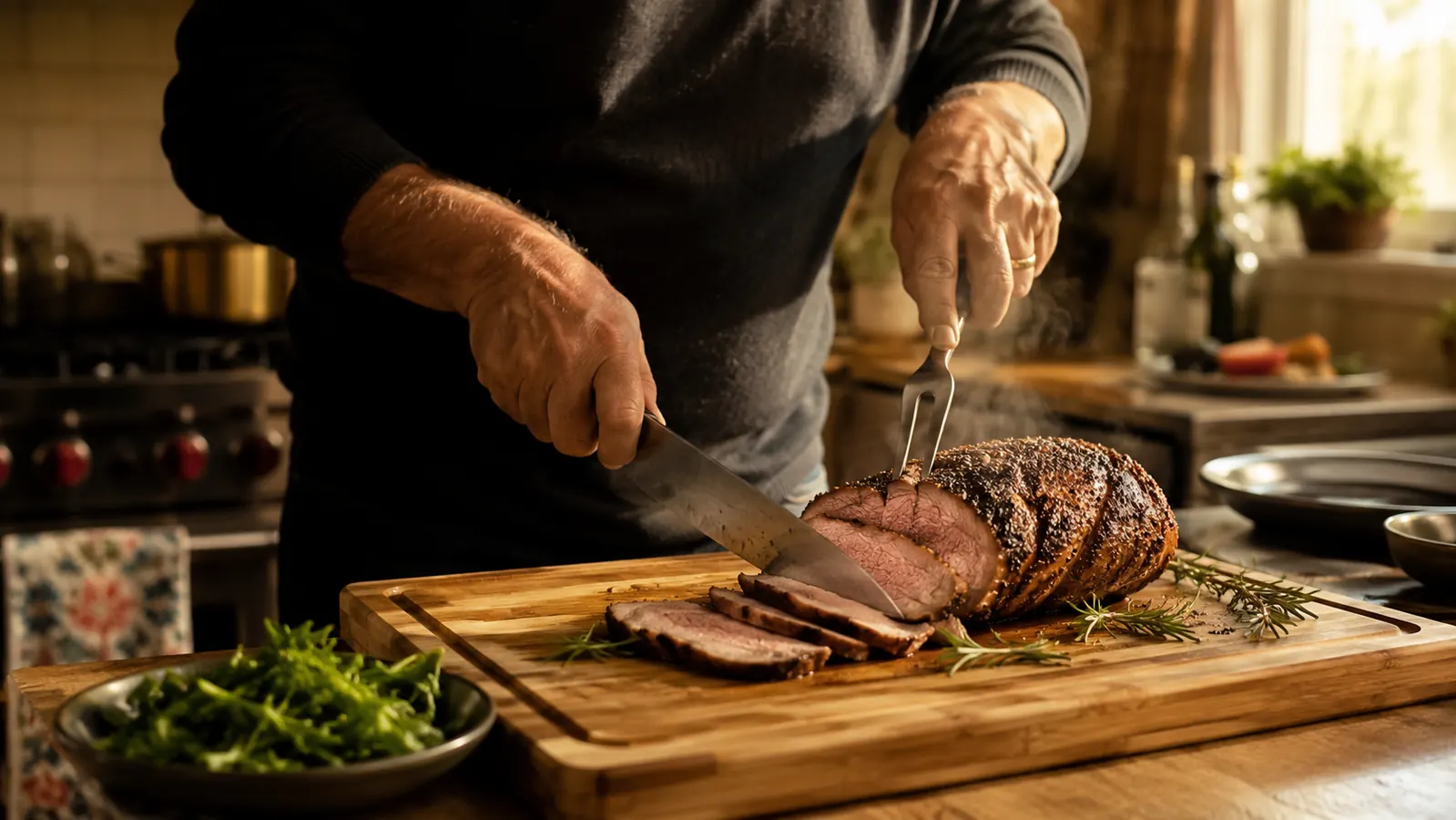
I want to tell you the truth about this board before you spend fifty-five dollars on it, because most of what I read before buying was either a five-star gush review or a one-star rant from somebody who clearly never oiled a wood board in their life. Neither one told me what I actually needed to know. I've had this Royal Craft Wood set on my counter for about eight months now, through two turkeys, one Easter ham, and more Sunday brisket dinners than I can count, and I've got some things to say that the glowing reviews skip right past.
My wife Renee bought it after our second Thanksgiving in a row ended with gravy running off the cutting board, across the counter, and onto the kitchen floor while I was mid-carve with six people standing around waiting for turkey. That's not a great look when your daughter-in-law is filming for the family group chat. So this review isn't a lab test written after one careful demo. It's what actually happened when a real board landed in a real kitchen with real messes to deal with, month after month, not just the first weekend it was new and exciting.
The Quick Verdict
It genuinely solves the juice-everywhere problem and looks good doing it, but the 'butcher block' branding oversells what's really a nice bamboo board that needs real upkeep to stay that way.
Amazon Check Today's Price →Tired of gravy running off the counter mid-carve?
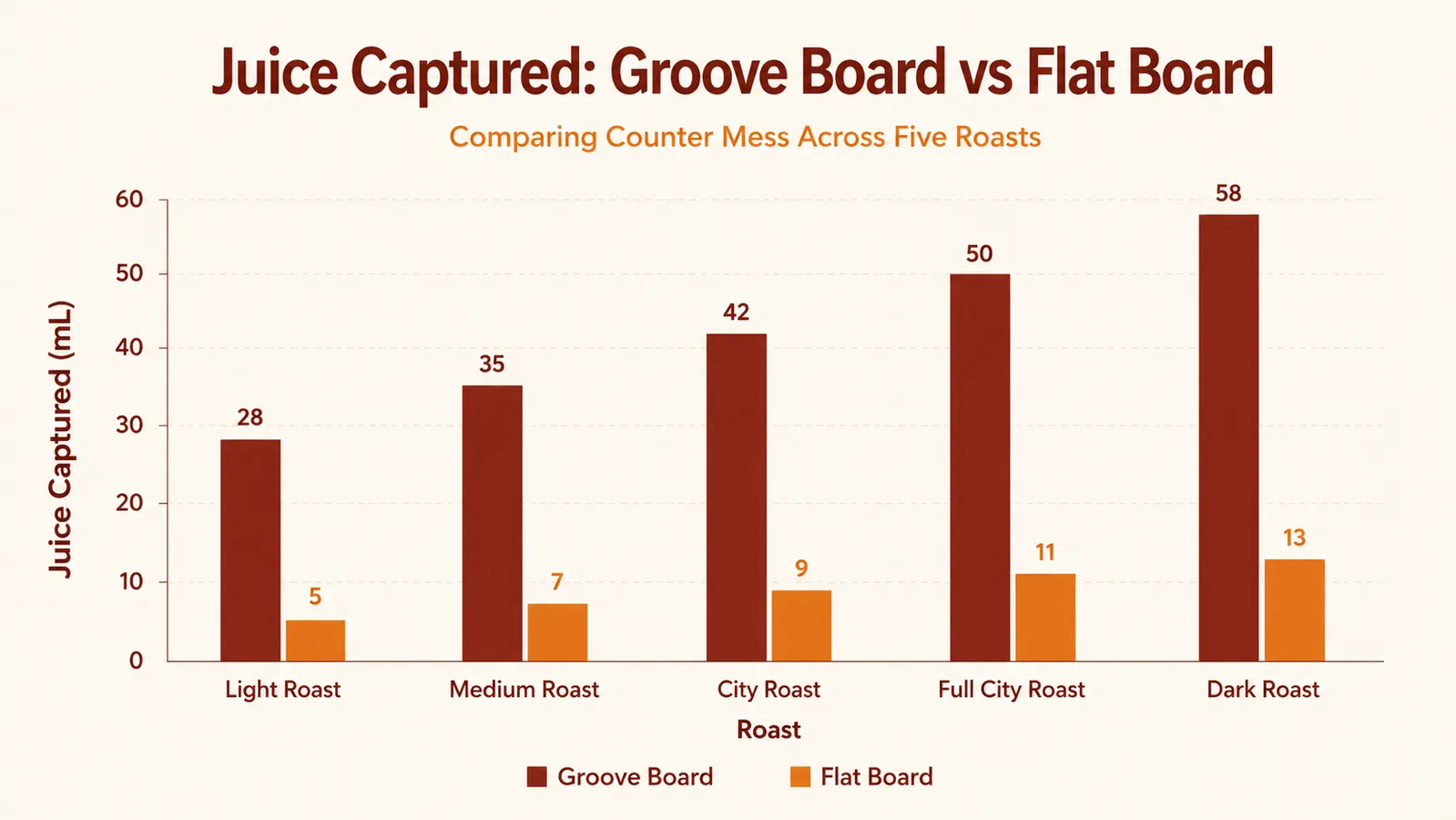
A deep juice groove actually holds the liquid instead of letting it flood your counter while you're trying to slice for a table full of people.
Amazon Check Today's Price on Amazon →How I've Used It
This board comes out for anything I'm carving in front of people, which in my house means turkey at Thanksgiving and Christmas, a spiral ham at Easter, and brisket most Sundays from spring through fall. I've also used it as a straight-up prep board for weeknight chopping when I don't feel like pulling out a smaller one, though I'll be honest, that's not really its job and it's a little much for dicing an onion.
The side handles matter more than I expected going in. Carrying a hot, heavy roast on a flat board with nothing to grip means you're basically praying it doesn't slide off on the walk from the oven to the table. With handles cut into the sides, I can carry a 14-pound turkey across the kitchen with both hands without white-knuckling the whole trip. That's a real, everyday improvement, not a marketing bullet point.
The set includes a few different sizes, and here's the part nobody mentions upfront. I use the big one for maybe three or four meals a year, the ones with a big roast and an audience. The two smaller boards in the set get used constantly for everyday cutting, cheese boards, and quick prep. If you're buying this set thinking you'll use the giant board daily, you probably won't. It's a special-occasion piece more than a workhorse, and once you accept that, the price makes a lot more sense.
My son-in-law borrowed the middle board for a fish fry he was hosting last summer, mostly because his own cutting board was warped beyond use, and he ended up asking where I got it before he'd even finished cleaning fillets on it. That's about as close to a genuine endorsement as I've seen from someone who wasn't looking to buy anything that day.
What the Juice Groove Actually Does, and Doesn't
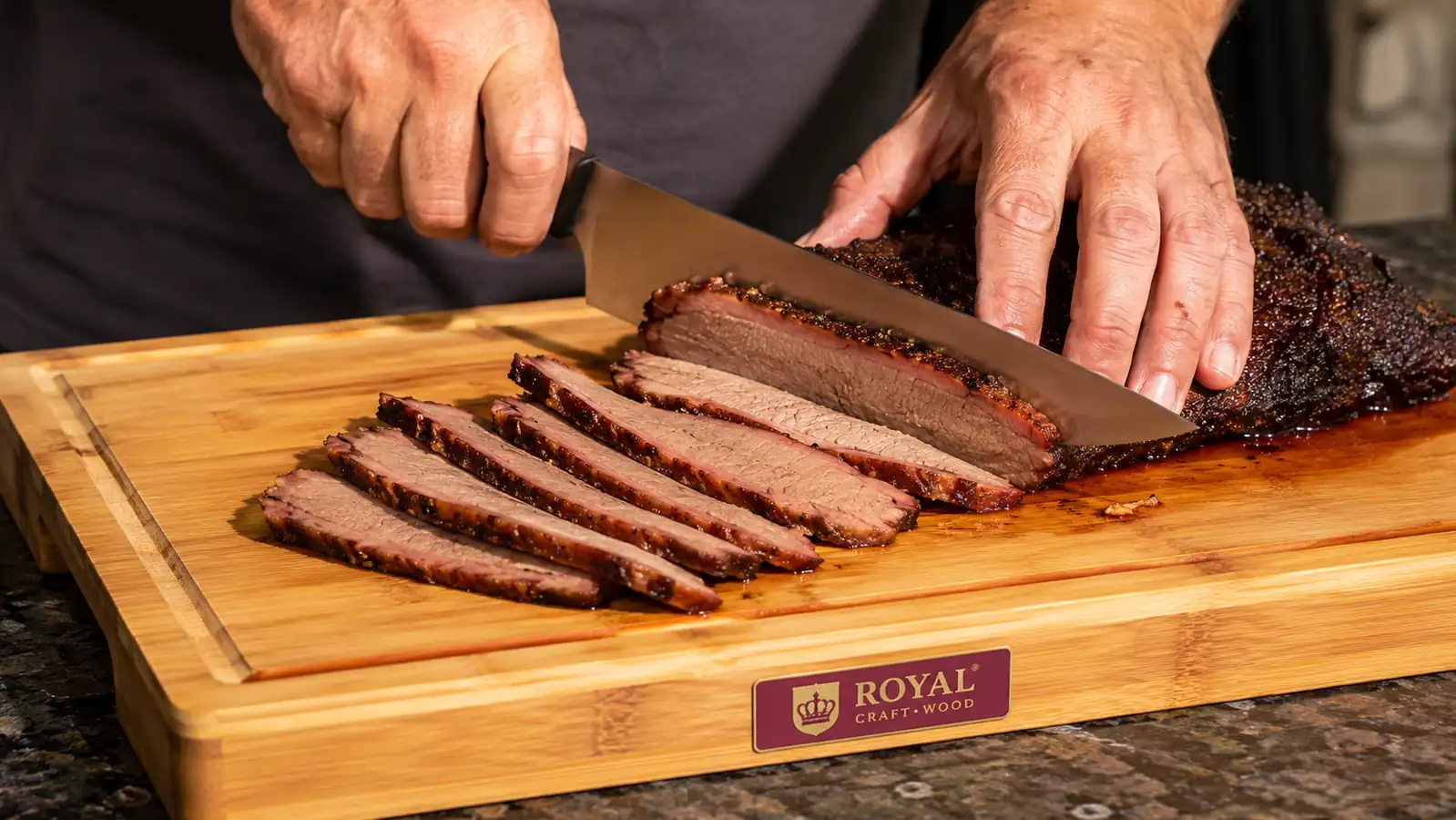
The groove works. I want to say that plainly because a lot of skeptical reviews act like juice grooves are a gimmick, and in my experience that's just not true. On my last brisket, I let a full trim's worth of fat and juice run for a good ten minutes while I sliced, and the groove held every bit of it. No counter cleanup, no juice dripping onto the floor where my dog was waiting underneath like it was Christmas morning for him.
What nobody tells you is that the groove has a limit, and you'll find it the first time you carve something genuinely juicy, like a well-rested prime rib or a turkey you didn't let rest quite long enough. If the meat is really dumping liquid, the groove fills up faster than you'd think, and if you keep slicing past that point, it does eventually overflow at the corners. I learned this on my second use, carving a turkey I'd only rested for fifteen minutes instead of the thirty it needed. Rest your meat properly and the groove handles it fine. Rush it, and you'll still get a little spillage.
The other thing is that the groove only helps if you're actually carving on a flat, level counter. My kitchen island has a very slight tilt I never noticed until this board, and on that side of the counter, juice pools in one corner of the groove instead of spreading evenly. It's not the board's fault, but it's the kind of real-world detail that never shows up in a five-star review written after one perfect use.
Bamboo Is Hard, Which Cuts Both Ways
Bamboo is technically a grass, not a hardwood, but it's processed and pressed into something that behaves more like a hard maple or oak board. That hardness is why this Royal Craft Wood board has held up to eight months of regular carving without a single crack or split. It also means it's noticeably harder on the counter than a softer wood board, which matters if you're the type who sets things down without thinking.
Here's the part I wish someone had told me before I bought it. Hard boards are tougher on your knife edge than softer end-grain wood boards. I noticed my carving knife needed honing more often after switching to this board compared to the softer cutting board I used to slice on. It's not a dramatic difference, and any board will dull a blade eventually, but if you're precious about keeping an edge razor sharp between sharpenings, know that bamboo asks a little more of your knife than a true end-grain butcher block would.
The flip side is durability. I've dropped one of the smaller boards from the set on my tile floor from counter height, and it didn't chip or crack, just bounced. Try that with a cheap particle-board cutting board and you'll be sweeping up splinters. For a family that hosts as often as we do, that toughness has been worth more to me than a slightly gentler edge on my knife. I've also left one of these boards out on the porch overnight by accident during a summer cookout, humid Gulf Coast air and all, and while I wouldn't recommend making a habit of it, it didn't warp or split from that one slip-up. I still brought it in and gave it an extra oiling the next morning just to be safe.
What I Used Before This, and Why I Switched
Before Renee brought this home, my carving setup was a plain maple cutting board I'd had for close to fifteen years, no groove, no handles, just a flat rectangle that had served us fine for everyday chopping but was a genuine liability on holiday carving days. I'd taped a folded towel around the edge of it more than once to try to catch runoff, which is exactly as effective and as embarrassing as it sounds when company's watching.
I'd also tried the trick of carving directly on a rimmed baking sheet, which does catch juice but gives you almost no stable surface to actually cut against, and the knife catches on the metal rim if you're not careful about where you're slicing. It solved the mess problem and created a new problem, which is about the most backyard-cook solution you can come up with under pressure.
Switching to this Royal Craft Wood board didn't just fix the juice issue, it changed how carving day feels in my house. I'm not hovering over the meat worried about the counter, I'm not grabbing paper towels mid-carve, and I'm not apologizing to whoever's cleaning up after dinner. That's a bigger deal than it sounds like on paper. The old maple board still gets used for weekday prep, but it hasn't touched a holiday roast since this one showed up.
The Maintenance Nobody Mentions Until It's Too Late
This is the section I really wish existed before I bought this board. Every wood cutting board, this one included, needs regular oiling with food-grade mineral oil or a wood conditioner to keep it from drying out and eventually warping or cracking. The listing photos and most of the reviews don't dwell on this, but if you skip it, you will pay for it in six months to a year with a board that starts to bow or develop hairline cracks near the handles.
I oil mine about once a month, more often in the winter when my house runs drier from the heater. It takes maybe ten minutes, and I've made peace with it as part of owning a nice wood board instead of a throwaway plastic one. But if you're not someone who already tends to a butcher block or a cast iron skillet, this is one more recurring chore, and I'd rather tell you that plainly than have you surprised when the board starts looking rough after a year of neglect.
I also learned the hard way not to run any part of this through the dishwasher, not that I'd expect anyone to try with a board this big, but the smaller boards in the set are tempting to toss in with a load of dishes when you're in a hurry. Renee did it once with the smallest board before we'd read the care instructions closely, and it came out slightly warped at one edge. Hand wash, dry it standing up, and oil it regularly. That's the deal you're signing up for.

Size and Weight in Real Life
The large Royal Craft Wood board in this set is genuinely big, big enough that it doesn't fit in my dishwasher rack even if I wanted to try, and it takes up real counter space when it's out. Storage is the honest tradeoff here. I keep mine standing upright in a gap between my refrigerator and the cabinet, which works, but if your kitchen is tight on storage, measure your space before you order this, because it's not a board you tuck into a drawer.
Weight-wise, the large board is heavy enough that I don't worry about it sliding around while I'm carving, which is a genuine safety plus when you've got a knife in your hand and a turkey that won't sit still. But that same weight means it's not something you're moving one-handed, especially once there's a hot roast sitting on it. I always clear counter space and set it down before I bring the meat over, rather than trying to carry board and roast together.
If your kitchen is on the smaller side, I'd honestly consider whether you need the largest board in the set at all. My sister has a galley kitchen with almost no spare counter, and when she asked me about this set, I steered her toward using just the mid-size board for carving. It still has a groove and handles, just in a footprint that actually fits her space, and she hasn't missed the bigger one once.
What I Liked
- Juice groove genuinely holds liquid through a full carving session, not just a marketing photo
- Side handles make carrying a hot, heavy roast much safer and easier
- Bamboo construction has survived eight months of regular use with zero cracks or chips
- The smaller boards in the set get real daily use for prep and serving
- Feels sturdy and doesn't slide around on the counter while carving
Where It Falls Short
- Requires monthly oiling or it will eventually dry out and warp, this is not optional maintenance
- Groove can overflow if the meat wasn't rested long enough before carving
- Bamboo is hard enough that it dulls a knife edge faster than a softer end-grain board
- Large board takes up serious counter and storage space
- Not dishwasher safe, and the smaller boards can warp if someone tries anyway
The groove isn't a gimmick, it really does catch the juice. Just don't expect it to save you if you rush the rest and carve a turkey that's still bleeding out.
Who This Is For
If you're the one carving the turkey, ham, or brisket in front of family more than a few times a year, this board earns its keep. It's also a good fit if counter mess during carving has genuinely been a recurring problem at your house, or if you like having a nice-looking board to actually serve from at the table instead of transferring everything to a platter first. I'd also add that if you already do a lot of entertaining, cheese boards, charcuterie spreads, holiday appetizer trays, the smaller boards in this set pull double duty there too, so you're not just paying for a once-a-year carving tool. That's part of what makes the price easier to swallow once you've had it a while.
Who Should Skip It
If you rarely carve whole roasts and mostly do everyday chopping, a smaller, single cutting board will serve you better and take up far less space. It's also not the right call if you're not willing to keep up with regular oiling, because a neglected wood board of any brand will warp and crack eventually, and this one is no exception despite the price tag. And if you've got limited storage or a kitchen where every inch of counter and cabinet space is already spoken for, be honest with yourself about whether you'll actually make room for a board this size, because it doesn't fold up small and it doesn't hide well in a normal drawer.
Eight months in, the groove still earns its keep at every big dinner
If gravy on the counter has been part of your carving routine, this is the fix that's actually stuck around at my house.
Amazon Check Today's Price on Amazon →