

Thanksgiving before last, I carved a fourteen-pound turkey on the same plastic cutting board I'd used for a decade, and by the time I got the bird moved to the platter, there was a puddle of juice running off the edge of the board, across my countertop, and dripping onto the kitchen floor where my granddaughter Emma was standing in her good church shoes. My daughter grabbed a roll of paper towels before I'd even finished the last slice, and my wife Debra gave me the look she gives when she's already decided something needs to change before next year. That look is how I ended up with this ROYAL CRAFT WOOD carving board, the one with the deep juice groove running around all four sides.
It's been a little over a year now, and I've carved somewhere around twenty roasts, turkeys, and briskets on this thing, plus more pork loins and rib racks than I bothered to count. I'm not going to tell you it's changed my life, that would be laying it on thick for a cutting board. But it changed my countertop, and honestly, it changed how relaxed I feel handing a knife to somebody else at the table. Here's what a full year with it actually looks like.
The Quick Verdict
A heavy, well-built bamboo carving board whose juice groove genuinely earns its keep every time a roast comes off the smoker. Not cheap, not light, but it's the last carving board I expect to buy.
Amazon Check Today's Price →Tired of mopping juice off your counter every time you carve a roast?
A real juice groove catches every drop before it hits your countertop, and this board is deep enough to actually do the job.
Amazon Check Today's Price on Amazon →How I've Used It
My routine hasn't changed much since that first Thanksgiving. I pull whatever I've cooked, whether that's a smoked brisket, a Sunday pot roast, or a spatchcocked chicken, and let it rest for ten to fifteen minutes right on the board itself before I ever put a knife to it. That resting step matters more than people think, and having a board with side handles built in makes it easy to move the whole thing from the oven rack straight to the counter without juggling a hot pan and a cutting board separately.
I carve almost everything against the grain, working from one end of the board to the other, and I let the groove do the work of catching drippings instead of chasing them with a towel. For turkey, I'll usually break it down into breast, thigh, and leg sections first, and having that much surface area, this board runs about eighteen by twelve inches, means I'm not constantly clearing off finished slices to make room for the next cut.
This board has made it to three Thanksgivings, four Easters, more Sunday dinners than I could list, and at least a dozen reunion cookouts where I'm carving a brisket or a couple of pork loins for a crowd of twenty-five or more. It lives on a shelf under my kitchen island the rest of the time, standing up on its side, which the handles also make easy to grip when I'm sliding it in and out.
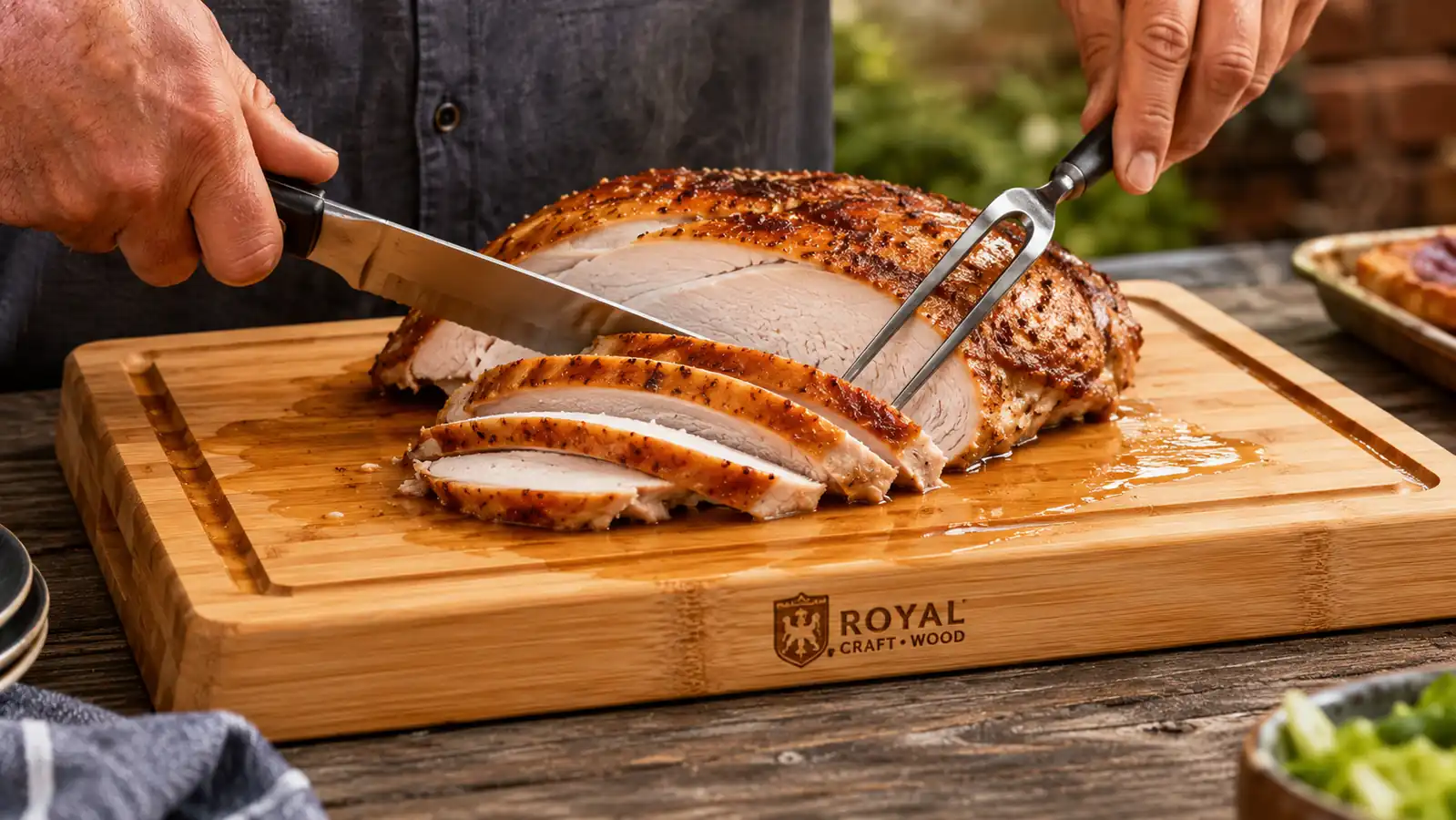
The Juice Groove and Why the Depth Actually Matters
I'd used cutting boards with a shallow groove etched around the edge before, and I want to be honest that those never impressed me much. A groove that's a sixteenth of an inch deep fills up after four or five slices and starts overflowing right back onto the counter, which basically defeats the purpose. This ROYAL CRAFT WOOD board's groove is noticeably deeper, closer to half an inch, and it holds a real amount of liquid, enough that I've carved a whole turkey and still had room left in the channel before I needed to pour it off into a gravy boat.
The groove runs the full perimeter on all four sides, not just the two long edges like some boards I looked at before buying this one. That matters more than you'd expect when you're working a big cut of meat and rotating the board as you go, because juice doesn't always run in the direction you'd guess. I've had drippings head toward every side of this board over a year of use, and the groove has caught every bit of it.
The side handles cut into the ends of the board are a small detail that turned out to matter a lot. They make it possible to lift a board loaded with a hot roast and a groove full of juice without tipping it, which I learned the hard way is not something every carving board gets right. I've carried this board from the stove to the table more times than I can count, juice and all, without spilling a drop.
A Year of Roasts, Turkeys, and Briskets
The real test of any kitchen tool is whether it holds up once it stops feeling new and just becomes part of your routine, and that's where this board has done well. A year in, this ROYAL CRAFT WOOD board still sits flat on my counter with no warping, even though it's been through plenty of hot roasts straight off the smoker and more than a few trips through a wet dishcloth afterward.
Where it's shined most is with big cuts. A whole turkey, a full brisket flat, a bone-in ham at Easter, all of these produce a lot of juice fast, and this board has never once let me down on those big meals. The bamboo surface has taken thousands of knife strokes without showing deep gouges, just the light surface scoring you'd expect from any wood board that actually gets used instead of sitting in a cabinet.
The one place I've noticed a real change is the color. The bamboo has darkened some from a year of oiling and use, going from a light honey tone to something closer to amber, especially in the groove itself where juice sits the longest before I rinse it out. It hasn't affected how it performs, just how it looks, and honestly I think it's started to look more like a board that's earned its keep than a brand new one straight out of the box.
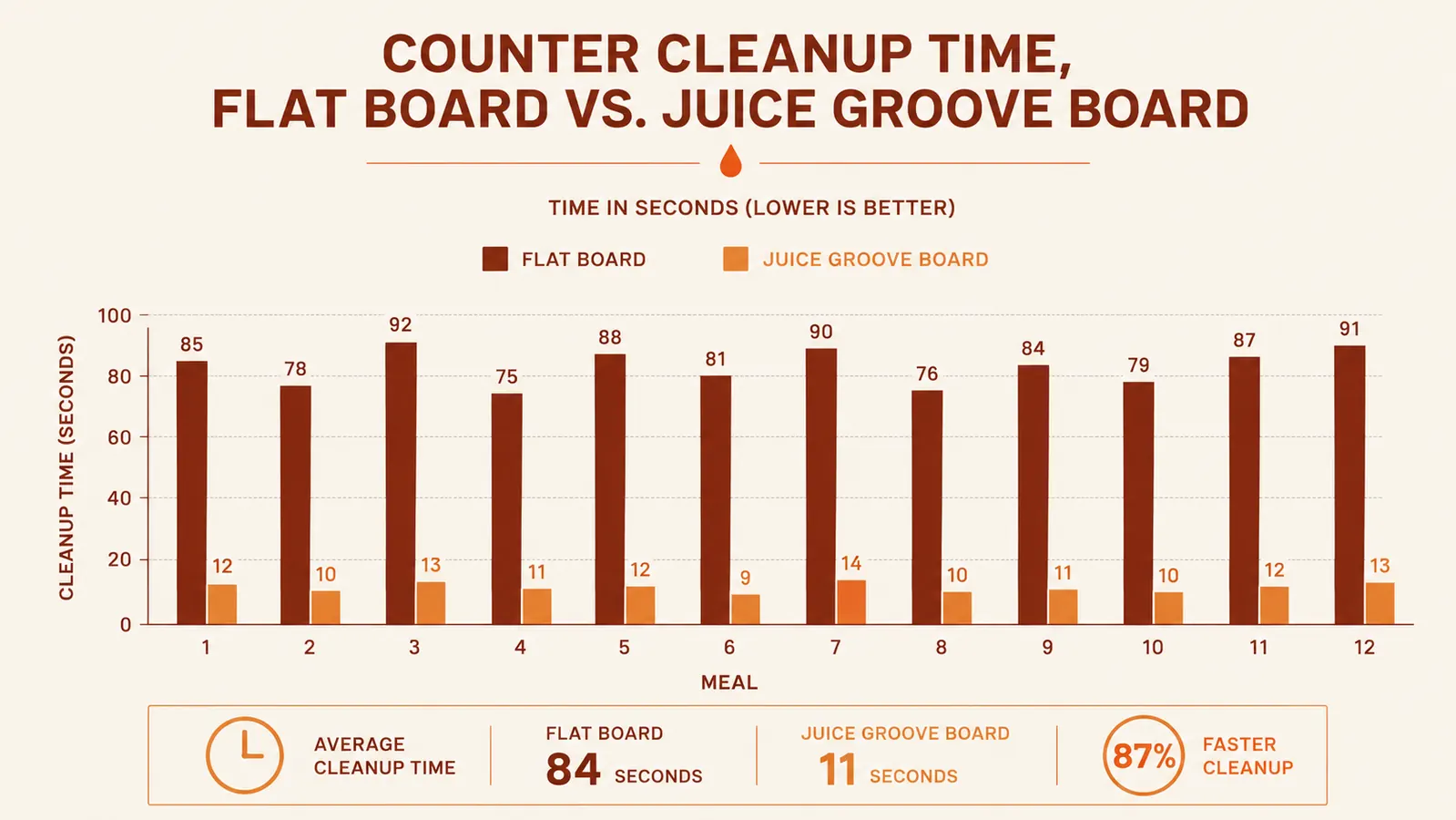
The Bamboo Construction and How It's Held Up
This ROYAL CRAFT WOOD board is built from layered bamboo rather than a single slab of hardwood, and I'll admit I was a little skeptical of that going in. Bamboo has a reputation for being harder than some traditional cutting board woods, which is good for durability but can be tougher on knife edges over time. A year in, I have noticed I'm sharpening my carving knife a touch more often than I did with my old wood boards, but it's a minor tradeoff for a surface this dense and stable.
Caring for it is straightforward but not maintenance-free. I hand wash it every time, dry it standing up so water doesn't pool in the groove, and oil the whole surface with food-safe mineral oil about once a month, more often in the summer when my kitchen runs drier from the air conditioning. Skip that oiling routine for a few months running and you'll start to see the wood look a little thirsty, dull instead of that deep amber shine. It's not hard, but it is a real chore you have to stay on top of, not something you set and forget.
It's also heavy. I'd put it at somewhere around eight or nine pounds, which is a feature when you're carving, because it doesn't slide around on the counter, but a real consideration if you've got limited cabinet space or a bad shoulder from moving it in and out of storage. I keep mine standing on a shelf at counter height specifically so I'm not lifting it up from a low cabinet every single time.
The Tradeoffs I've Made Peace With
I'd rather tell you the annoying parts than pretend this board is perfect. First, it's big. Eighteen by twelve inches is exactly what you want when you're carving a turkey for fifteen people, but it takes up serious real estate on a counter, and it won't fit in most dishwashers or standard drying racks, so plan on hand washing and air drying it every time.
Second, the oiling routine is real maintenance, not a suggestion you can ignore forever. If you're not the kind of person who already tends to cast iron or wood tools, this is one more thing added to your kitchen chore list, and skipping it for too long will shorten how good the board looks and how well it holds up over the years.
Third, it costs more than a basic plastic cutting board, and I want to be upfront that you're paying for the groove depth, the bamboo construction, and the handles, not for anything flashy. If all you need is a board to chop vegetables on, this is overkill. It's built specifically for the job of carving something big and juicy, and that's the only job I'd recommend it for.

What I Tried Before This
Before this board, I carved on the same plastic cutting board I used for everything else in the kitchen, chopping onions one minute and carving a roast the next. It worked fine for smaller cuts, a chicken breast or a small pork tenderloin, but anything with real volume of juice overwhelmed it fast, because it had no groove at all, just a flat surface that funneled liquid straight off the edge.
I also tried a cheaper bamboo board with a shallow groove I picked up at a big box store, the kind that runs a fraction of what this one costs. It looked similar in photos, but the groove filled up after just a few slices of turkey, and the wood started cupping slightly within about four months of regular use. This board has outlasted that one by a wide margin, and the deeper groove alone has been worth the difference for how I cook.
What I Liked
- Deep, four-sided juice groove actually holds a real amount of liquid without overflowing
- Large surface handles a whole turkey or brisket without constant clearing
- Built-in side handles make it safe to carry loaded with hot meat and juice
- Bamboo construction has stayed flat with no warping after a full year
- Doubles as a serving board once slicing is done
Where It Falls Short
- Heavy at eight to nine pounds, awkward for anyone with limited storage or a bad shoulder
- Requires monthly oiling to keep the wood from drying out
- Too large to fit most dishwashers or standard drying racks
- Costs more than a basic plastic cutting board
- Overkill if you're not regularly carving large cuts of meat
My wife stopped keeping a roll of paper towels within arm's reach of the carving station about two months after this board showed up. That's the whole review, really.
Who This Is For
If you're the one carving the turkey, the brisket, or the Easter ham for your family every year, this board earns its keep fast. It's also a great fit if you host reunions or potlucks where you're slicing big cuts for a crowd, or if you're simply tired of juice running off your board and onto the counter every single time you carve something bigger than a chicken breast.
Who Should Skip It
If most of your kitchen work is chopping vegetables or slicing smaller cuts that don't produce much liquid, you don't need a board built specifically for carving. It's also not the right pick if counter and storage space are tight in your kitchen, or if you're not willing to add a monthly oiling routine to your maintenance list. A smaller, lighter board will serve you better in that case.
A year in, this is still the board I reach for on carving day
If your counter turns into a mess every time you slice a roast, this is the fix that actually stuck around at my house.
Amazon Check Today's Price on Amazon →