
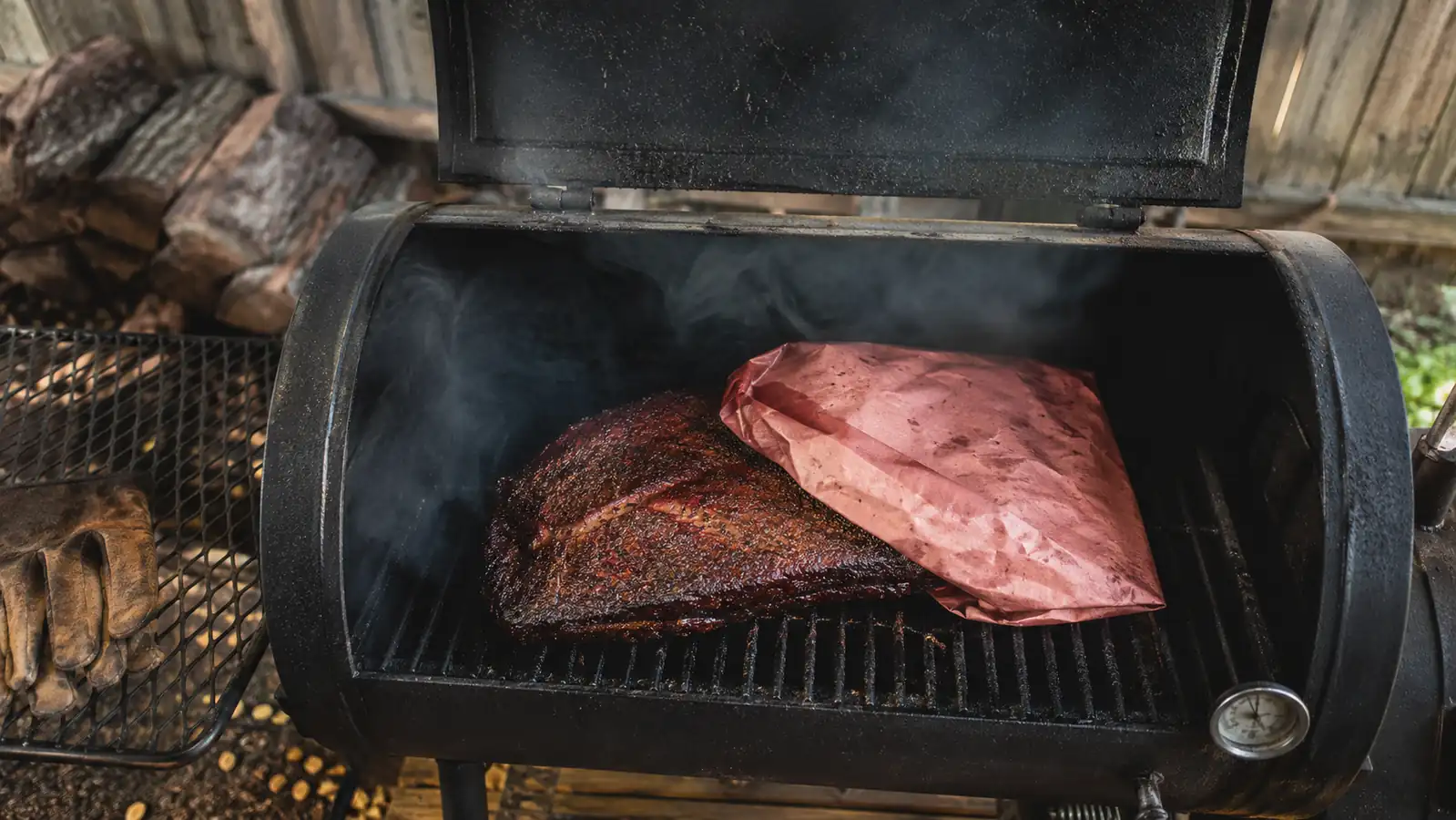
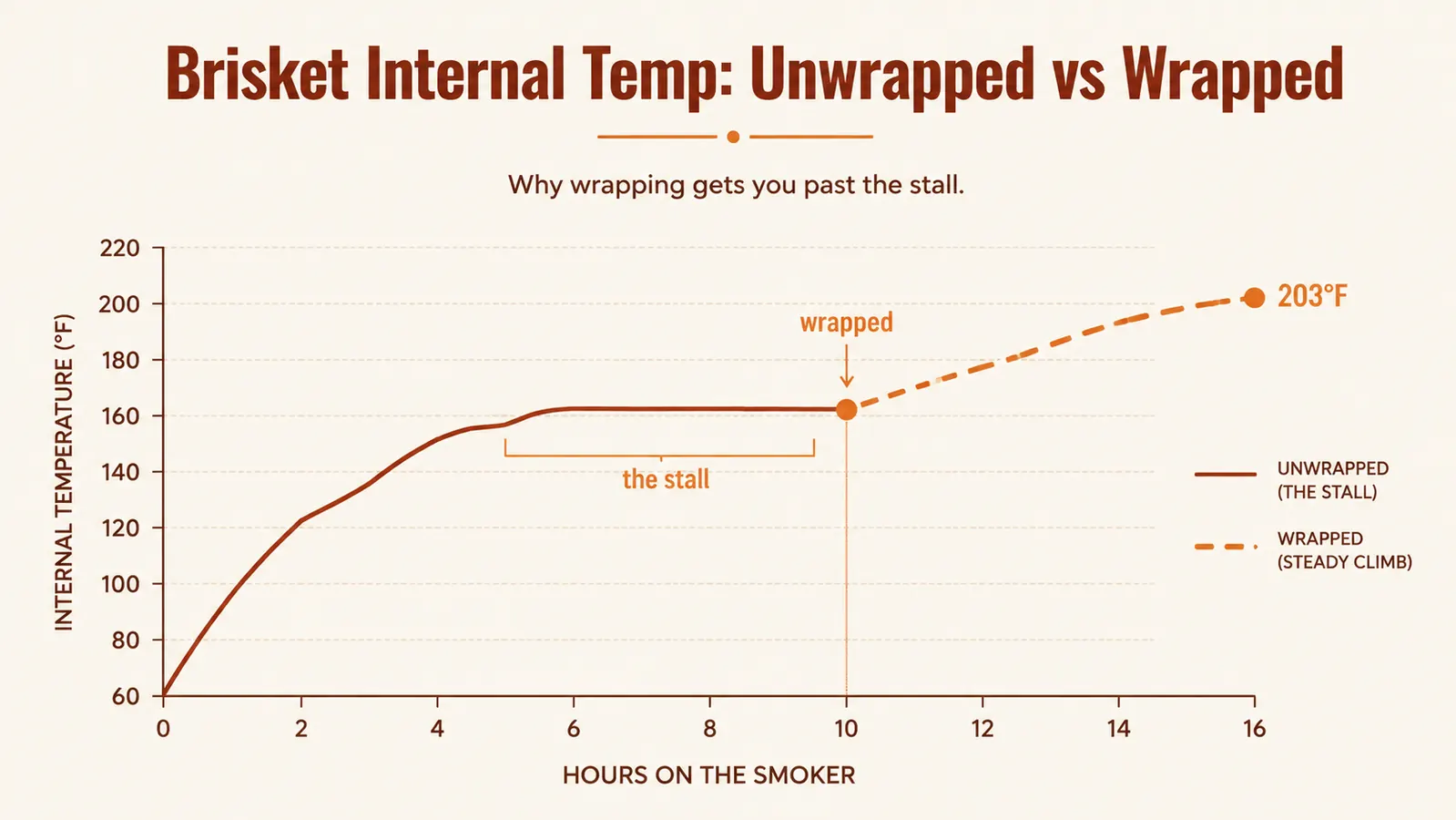
I fought the stall for probably six years before I figured out what I was actually doing wrong. You know the stall I mean, that stretch where your brisket climbs nice and steady up to about 150, 160 degrees, and then it just parks there. Two hours go by, three hours, and the needle on the thermometer barely moves. I used to think something was wrong with my smoker. Nothing was wrong with my smoker. That's just what happens when the moisture on the surface of the meat starts evaporating fast enough to cool it right back down, same as sweat cooling your skin on a hot day.
The fix has been around a lot longer than I have, and it's the same trick the old Central Texas meat markets used before anybody called it a technique. You wrap the brisket in butcher paper partway through the cook. It pushes past the stall in a couple hours instead of four or five, and if you do the wrap right, you don't lose a lick of the bark you spent all morning building. Do it wrong, with foil or with paper that's too flimsy or wrapped too loose, and you end up with a brisket that tastes pot-roasted instead of smoked. I've made both mistakes plenty of times. This is the method I settled on after a lot of overcooked Saturdays, using a roll of Bryco Goods pink butcher paper I keep in the garage next to the smoker.
This isn't a fussy restaurant technique either. It's the same wrap I use on a random Saturday and the same wrap I use when I've got a 14-pound packer going for a church potluck and forty people showing up at noon whether the brisket's ready or not. Once you've got the timing and the fold down, wrapping stops being a variable you worry about and just becomes another step in the cook, same as building your fire or trimming the fat cap.
Don't let a good brisket turn to pot roast in foil
Pink butcher paper lets the brisket breathe just enough to hold onto that bark while still pushing through the stall. Foil seals everything in and steams the crust soft. Bryco Goods sells it in an 18-inch by 175-foot roll, food-grade and unwaxed, which is enough paper to get you through a whole smoking season without running out mid-cook.
Amazon Check Today's Price on Amazon →Step 1: Get the Right Paper and Tear Off Enough of It
Pink butcher paper, sometimes called peach paper, is not the same thing as the white freezer paper folks use to wrap fish for the deep freeze. Freezer paper has a plastic coating on one side to hold moisture in, which defeats the whole purpose here. You want the uncoated, food-grade pink paper made for smoking, and Bryco Goods is what I keep stocked because the roll is wide enough, 18 inches, to wrap a full packer brisket without piecing two sheets together.
For a 12 to 14 pound packer, I tear off a length about three times the length of the brisket itself, roughly 4 to 5 feet. That sounds like a lot of paper, but you need the overhang to fold and tuck properly. Lay it out on a clean counter or a large cutting board before you touch the meat, because once that brisket comes off the smoker it's hot and greasy and you don't want to be fumbling with the paper roll one-handed.
I keep a second sheet torn off and ready just in case the first one tears. It happens, especially if the brisket has a big pool of rendered fat sitting on top when you pull it. Better to have backup paper sitting right there than to be tearing off more while your brisket sits open and losing heat.
Step 2: Wrap at the Right Temperature, Not the Right Time
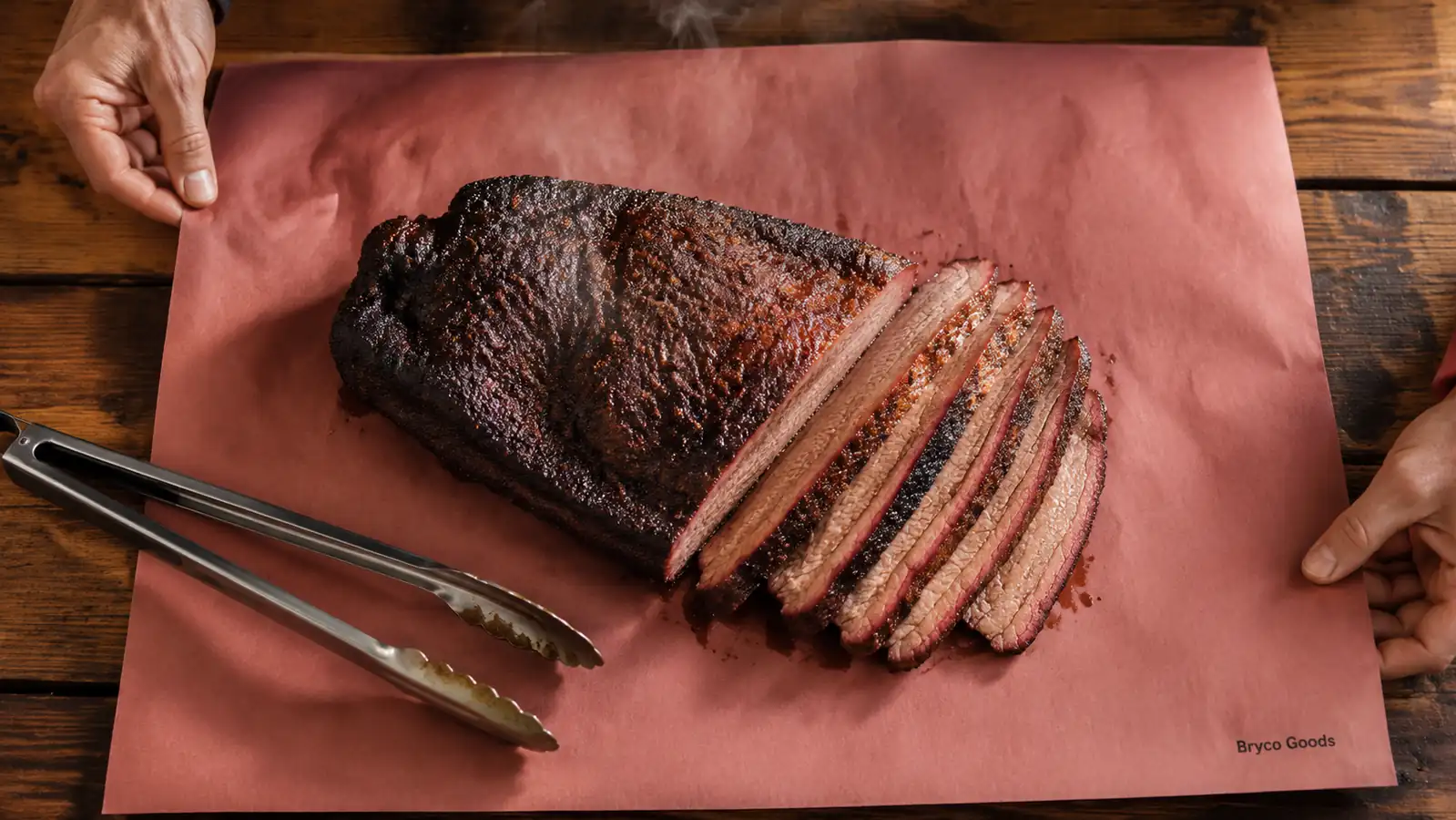
This is where I see the most guys go wrong, myself included for years. They wrap on a schedule, like clockwork at hour six no matter what. Brisket doesn't care what time it is. What matters is the internal temperature and how the bark looks and feels. I pull my brisket to wrap when it hits somewhere between 160 and 170 degrees internal, and when the outside has gone from wet and pale to a deep, almost black-red color that feels firm, almost like tree bark, when you press a thumb against it.
That's usually four to six hours into the cook on my offset running steady at 250 to 275 degrees, but I've had briskets hit that mark at hour three and others take past hour seven depending on the cut, the humidity that day, and how fatty the point end is. Trust the probe and your eyes over the clock every time.
If you wrap too early, before the bark has really set, the paper will soften what little crust you've built and you'll end up with a gray, mushy exterior. Too late and you've already lost the time-saving benefit of wrapping at all, since most of the stall will have already ground your cook to a crawl. When I'm not sure, I press a knuckle against the surface. If it gives like a soft pillow, it's not ready. If it feels closer to a hard-crusted loaf of bread, it's time.
Step 3: Fold It Like an Envelope, Not a Burrito
Set the brisket fat-side down in the center of your paper, angled so one corner points toward you like a diamond. Pull that near corner up and over the brisket, tucking it snug against the meat so there's no air pocket underneath. An air pocket is where steam collects and turns your bark soft, so snug matters here.
Next, fold in the left and right corners, the way you'd fold the sides of a burrito before rolling it, pulling each one tight across the top of the brisket. Then roll the whole thing forward, away from you, keeping tension on the paper the entire time so it hugs the meat instead of ballooning around it. You want the finished wrap tight enough that you could pick the brisket up by the paper and nothing would shift inside.
The last flap, the far corner, gets tucked underneath the brisket once you've rolled it all the way over. That's the seam, and having it face down against the grate means the weight of the brisket itself holds it closed. No tape needed if you've kept the tension right, though I'll admit I've used a strip of masking tape on a windy day when the paper wanted to unroll on me. Wear a pair of thin cotton gloves under nitrile ones for this part, since a brisket at 165 degrees is plenty hot enough to blister bare hands during the fold.
Step 4: Get It Back on the Smoker With the Probe Repositioned
Slide the wrapped brisket back onto the grate seam-side down and reinsert your temperature probe through the paper into the thickest part of the flat, same spot you had it before if you can manage it. The paper is thin enough that a probe pushes through without much resistance, so there's no need to unwrap and rewrap just to check on it.
From here, the temperature climb usually speeds up noticeably. What might have taken three more hours unwrapped often takes 90 minutes to two hours wrapped, since the paper is holding in enough moisture and heat to push past that stubborn stall zone. I keep my smoker steady at the same 250 to 275 range I've been running the whole cook. No need to bump the heat up just because it's wrapped.
Start checking for doneness once you're in the low 190s. You're looking for 203 degrees internal in the thickest part of the flat, and just as important, a probe that slides in like it's going into softened butter with almost no resistance. If the temp is right but the probe still feels like it's dragging through firm meat, give it another 20 or 30 minutes and check again. Don't panic if the bark looks slightly damp when you peek under the paper at this stage. It firms right back up once it's had its rest.
Step 5: Rest It Wrapped, Then Unwrap Right Before You Slice
Once your brisket hits 203 and probes tender, pull it off, keep it wrapped in the same paper, and set it in a dry cooler or an empty oven with the heat off for at least 45 minutes, an hour is better if your schedule allows it. This rest is not optional. Slice a brisket straight off the smoker and you'll watch half the juice you worked all day for run right out onto the cutting board.
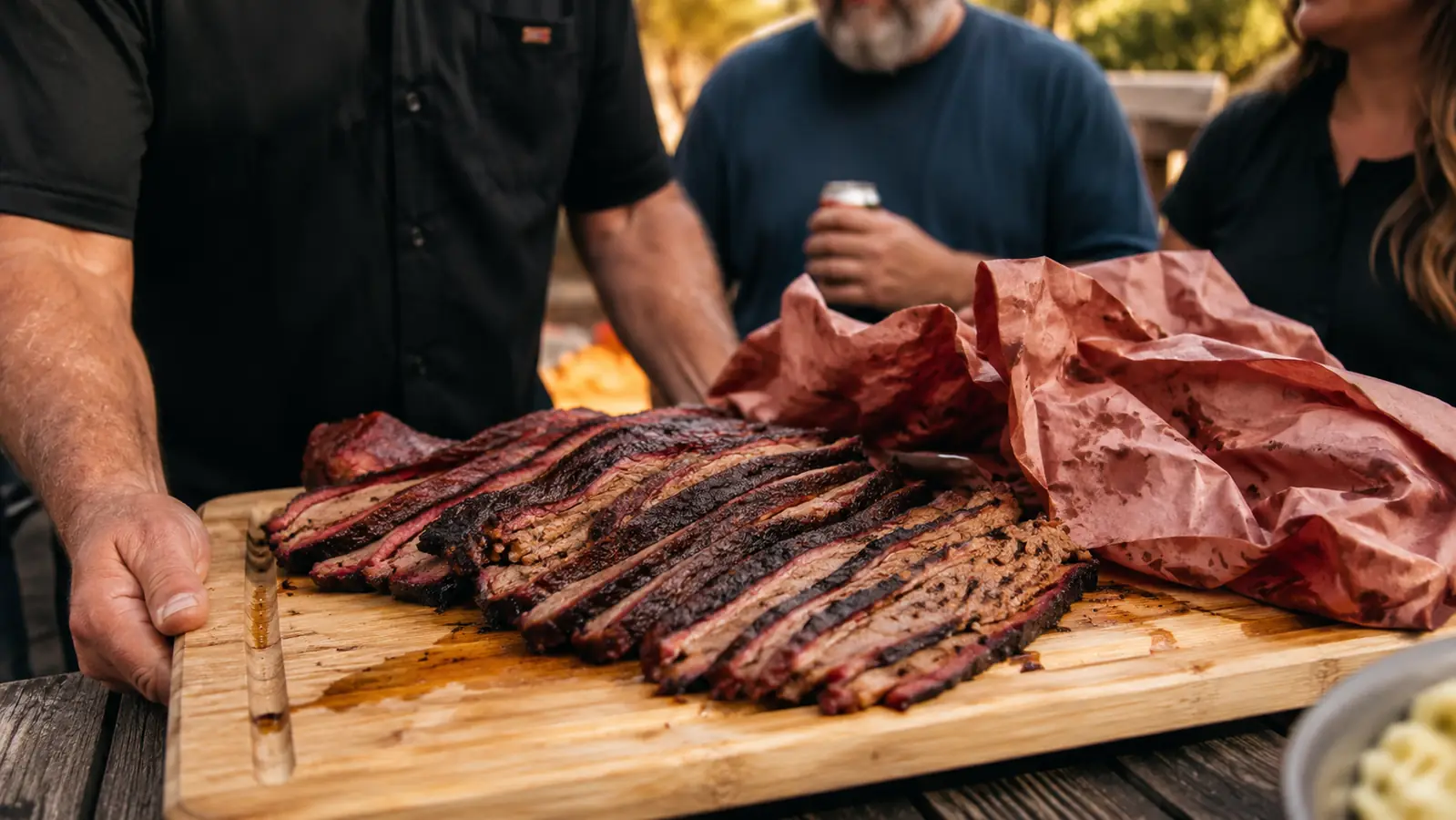
When you're ready to serve, unwrap it right at the cutting board, not before, so all that rendered juice and fat pooled in the paper gets caught in one spot instead of dripping across your counter. I usually pour that pooled juice back over the sliced brisket, it's better than any bottled sauce I've ever bought. If there's extra, I'll save a cup of it for a pot of beans the next day, it carries more smoke flavor than anything you could add from a bottle.
Slice against the grain, starting with the flat and switching direction once you hit the point, since the grain runs a different way through each muscle. A brisket that's rested properly in its own paper will slice clean with almost no shredding at the edges.
What Else Helps
A good instant-read thermometer probe placed in the flat, not the point, gives you the most honest reading since the flat is leaner and finishes slower. A dry cooler with a towel underneath the brisket keeps it from sweating during the rest, which matters more in summer than winter. And if you're feeding a crowd, wrap two smaller briskets instead of one giant packer, they cook more evenly and you'll use less paper overall since two 8-pounders wrap faster and tighter than one unwieldy 16-pounder. A sharp slicing knife matters here too. A dull blade will tear through that rested bark instead of cutting it clean, and there's nothing sadder than shredding a brisket you smoked for twelve hours right at the very last step.
The paper isn't magic. It's just the difference between letting your brisket steam in its own moisture for two hours or letting it stall out for four. Everything else about good brisket, the rub, the smoke, the patience, still has to be there.
Keep a roll on hand for every brisket, pork butt, and rack of ribs
Bryco Goods pink butcher paper is what I reach for whether I'm wrapping a full packer brisket, a pork butt, or resting a rack of ribs before I slice them. One roll lasts most backyard cooks a full season of weekend smokes.
Amazon Check Today's Price on Amazon →