
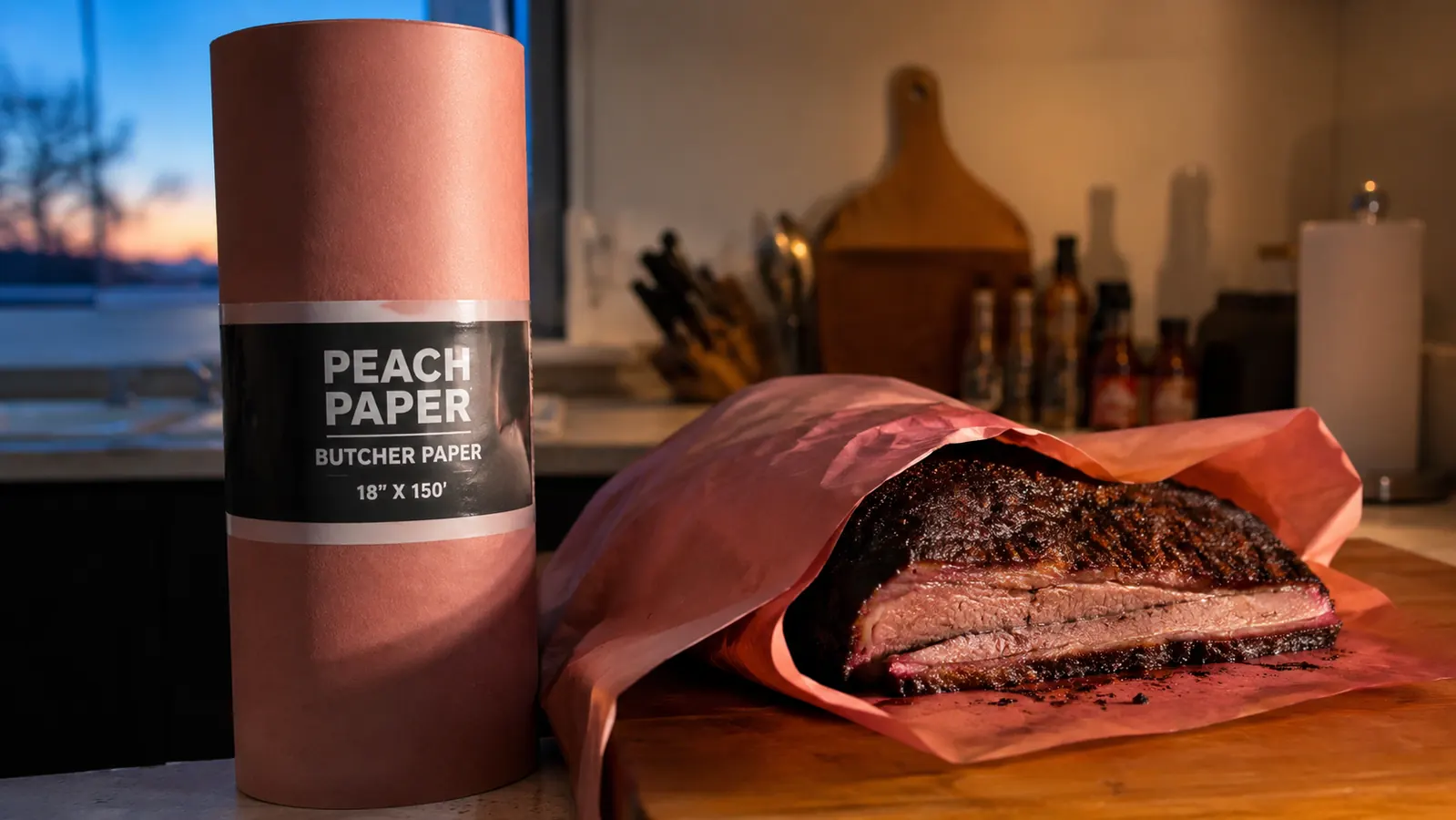
I want to get one thing out of the way before I say anything nice about this paper. Nobody selling it is going to tell you that the box it comes in has a dispenser edge that tears crooked about one time in four, and that the first time that happens on a Saturday morning with a brisket already resting on the counter, you will say a word you don't usually say in front of your grandkids. That's the kind of thing you only find out after you've bought the stuff, so that's where I'm starting instead of the usual song and dance about how it changed my cooking forever.
I've gone through four rolls of the Bryco Goods pink butcher paper since I switched off foil two summers ago, wrapping everything from a nine-pound brisket for my daughter's engagement dinner to pork butts for the Redemption Baptist fall potluck. This isn't the review that tells you it changed my life. It's the one that tells you what actually happens when you use it week after week, good and bad, including the stuff that never makes it into a five-star write-up because nobody wants to admit their favorite tool has quirks.
The Quick Verdict
It does what pink paper is supposed to do, letting bark breathe instead of steaming it soft, but it won't fix a wrap job you rush, and the roll box is clumsier than the marketing photos suggest.
Amazon Check Today's Price →Before you grab another roll of foil for your next brisket, read this
If your bark keeps going soft under foil no matter how careful you are, the paper itself might be the fix, not your technique. Check today's price and stock on Amazon before your next cook.
Amazon Check Today's Price on Amazon →How I've Actually Used It
My setup is a 22-inch offset smoker in the backyard, not a competition rig, so I'm the guy pulling a brisket at 165 internal, cursing at a stall, and reaching for paper because I got tired of foil turning the bark to mush. The first brisket I wrapped with this Bryco Goods roll was for a Sunday dinner where my son-in-law Marcus was coming over for the first time since the wedding. I did not want to serve him a gray, steamed brisket. That one came out with bark I was actually proud of, dark and a little sticky, not the soft leathery stuff foil gives you.
Since then I've used it on pork butts, on a couple of racks of ribs when I was experimenting with the Texas crutch method, and once, out of pure laziness, to wrap up leftover brisket for the fridge instead of using foil. That last one is honestly where it surprised me. It breathes just enough that leftover brisket doesn't turn soggy overnight the way it does under foil, though I wouldn't recommend it for more than a day or two before you switch to something airtight for the freezer.
I measure success in this house by whether my wife Linda asks for seconds without me offering first, and by that measuring stick, this paper has been part of some good Sundays. But I've also had cooks where the paper did nothing for me because I wrapped too early, and no roll of paper on earth fixes that mistake. I've learned to treat it as one tool in the process, not a magic fix that erases whatever went wrong earlier in the cook.
Where the Paper Actually Earns Its Keep
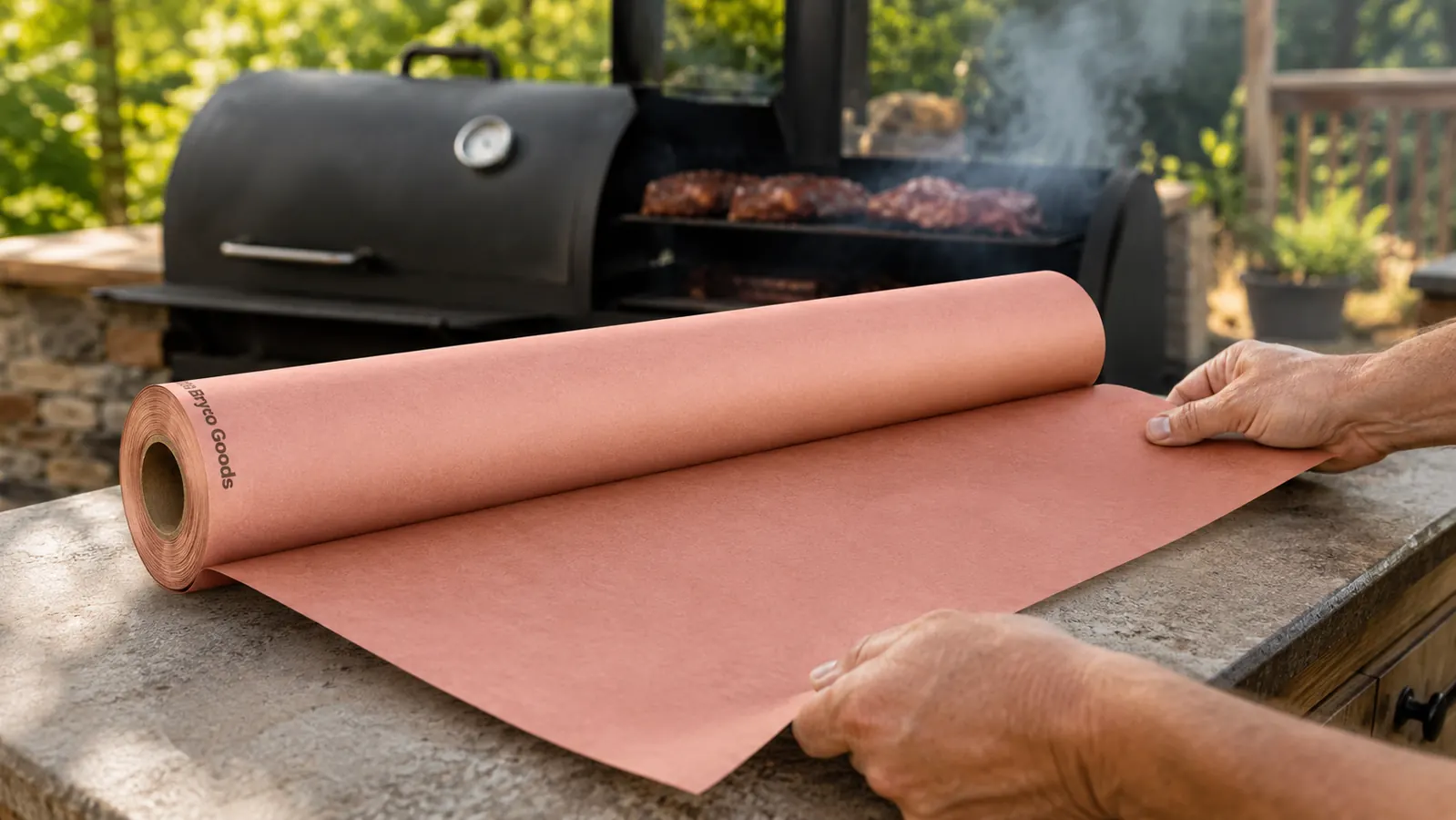
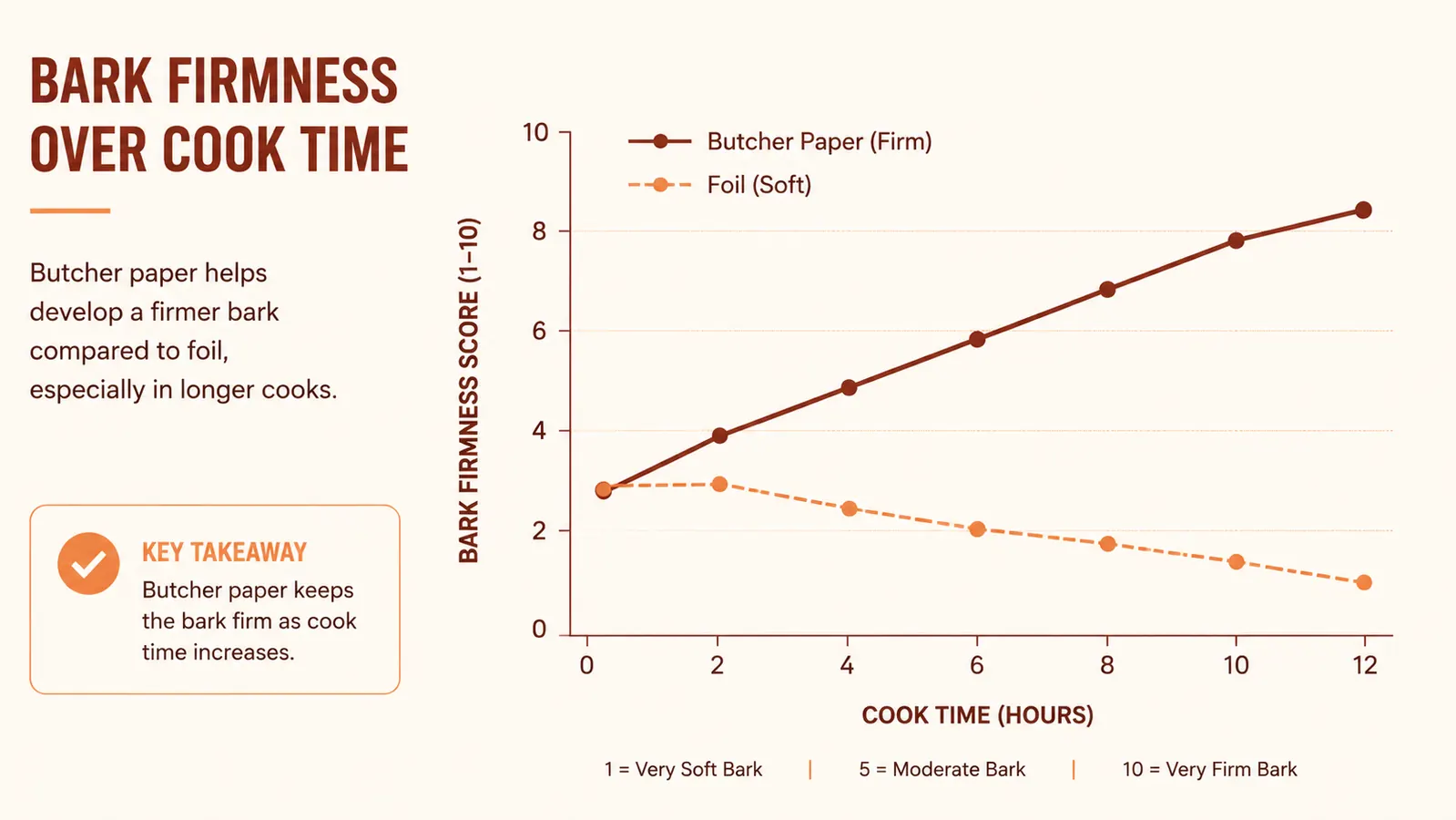
The core selling point is real. Pink or peach butcher paper, whatever you want to call the color, is porous enough to let some steam escape while still speeding up the stall, which foil handles by sealing everything airtight and turning your bark into wet cardboard. On my smoker, wrapping at the stall with this paper usually shaves 45 minutes to an hour off the total cook time compared to going naked the whole way, without costing me the bark I worked three hours to build with smoke and a good rub.
The paper itself is heavier than the stuff you'll find at a regular grocery store. It doesn't tear when you're wrapping a hot, greasy brisket and trying to fold tight corners with one hand while holding the meat with the other. I've torn cheap butcher paper doing that exact move and ended up with fat running down my forearm and onto the counter. This Bryco Goods roll has held up every single time I've wrapped a full packer brisket, corners and all, even on cooks where I was rushing because company had already arrived.
It's also food-grade and unbleached, which matters more than people think. I did some digging after a guy at the potluck asked if the pink dye was safe, and it turns out the color comes from the paper pulp process, not an added dye, so there's nothing to actually worry about health-wise. That said, I'm not a chemist, I'm a guy with a smoker, so take that as one backyard cook's understanding, not gospel from a lab coat.
The Parts Nobody Warns You About
Here's what the five-star reviews don't mention. The roll comes in a long cardboard box with a serrated edge for tearing sheets, similar to a plastic wrap box, and that edge is not as sharp or as reliable as the one on your kitchen wrap. About one time out of four, my tear comes out jagged instead of clean, and I end up trimming the sheet with scissors before I can use it. It's a small annoyance, but it's the kind of thing that catches you off guard on a morning when you're already behind schedule with guests coming at noon and a brisket sitting there getting cold while you fight a cardboard box.
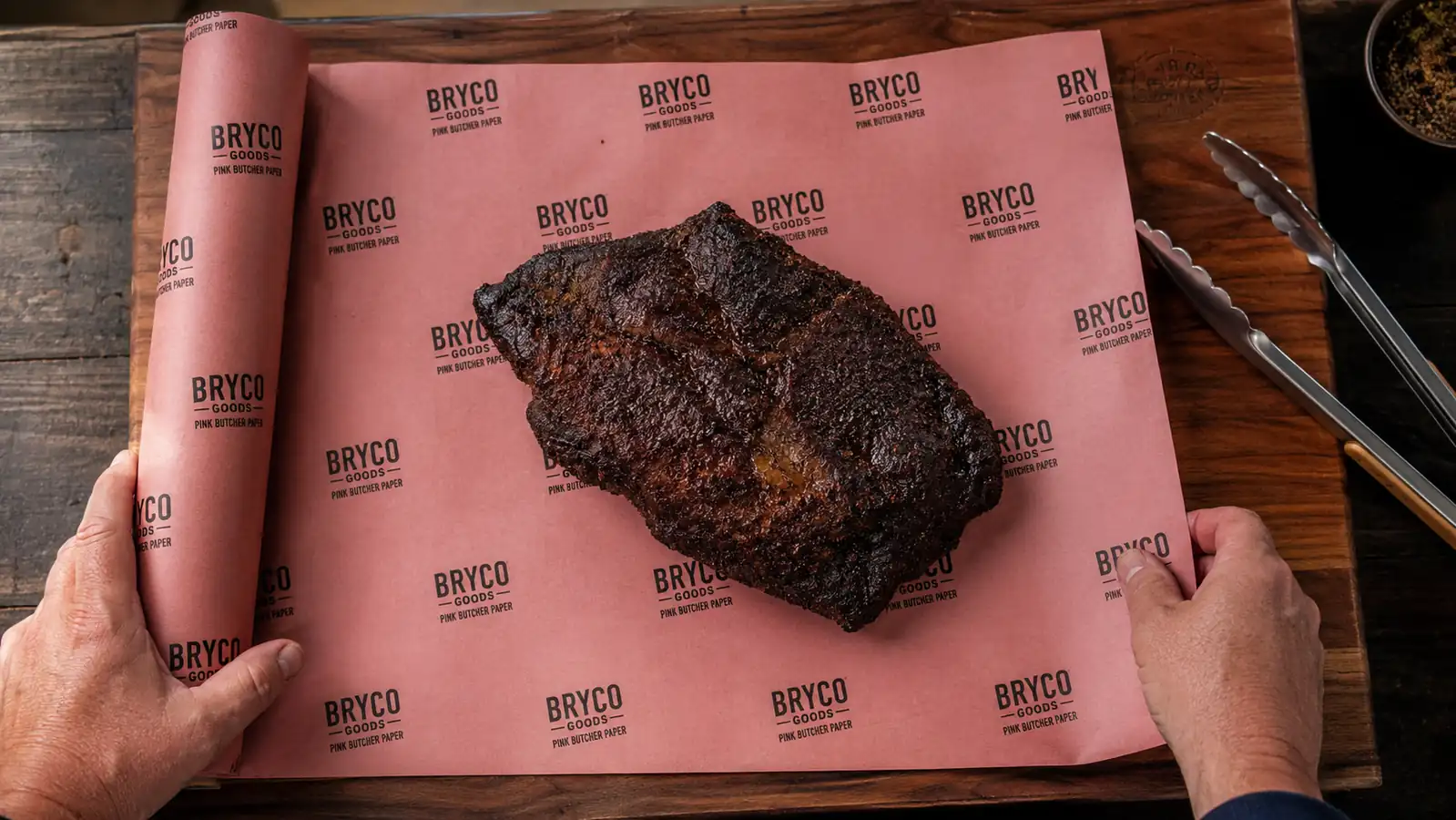
The roll is also 18 inches wide, which sounds generous until you're wrapping a big packer brisket that's 20 inches long with the point still attached. I've had to overlap two sheets more than once to fully enclose a really large brisket, which uses more paper than you'd plan for if you're estimating cooks per roll based on the package math. If you cook big briskets regularly, budget for that overlap and don't assume the sheet size will always be enough on its own.
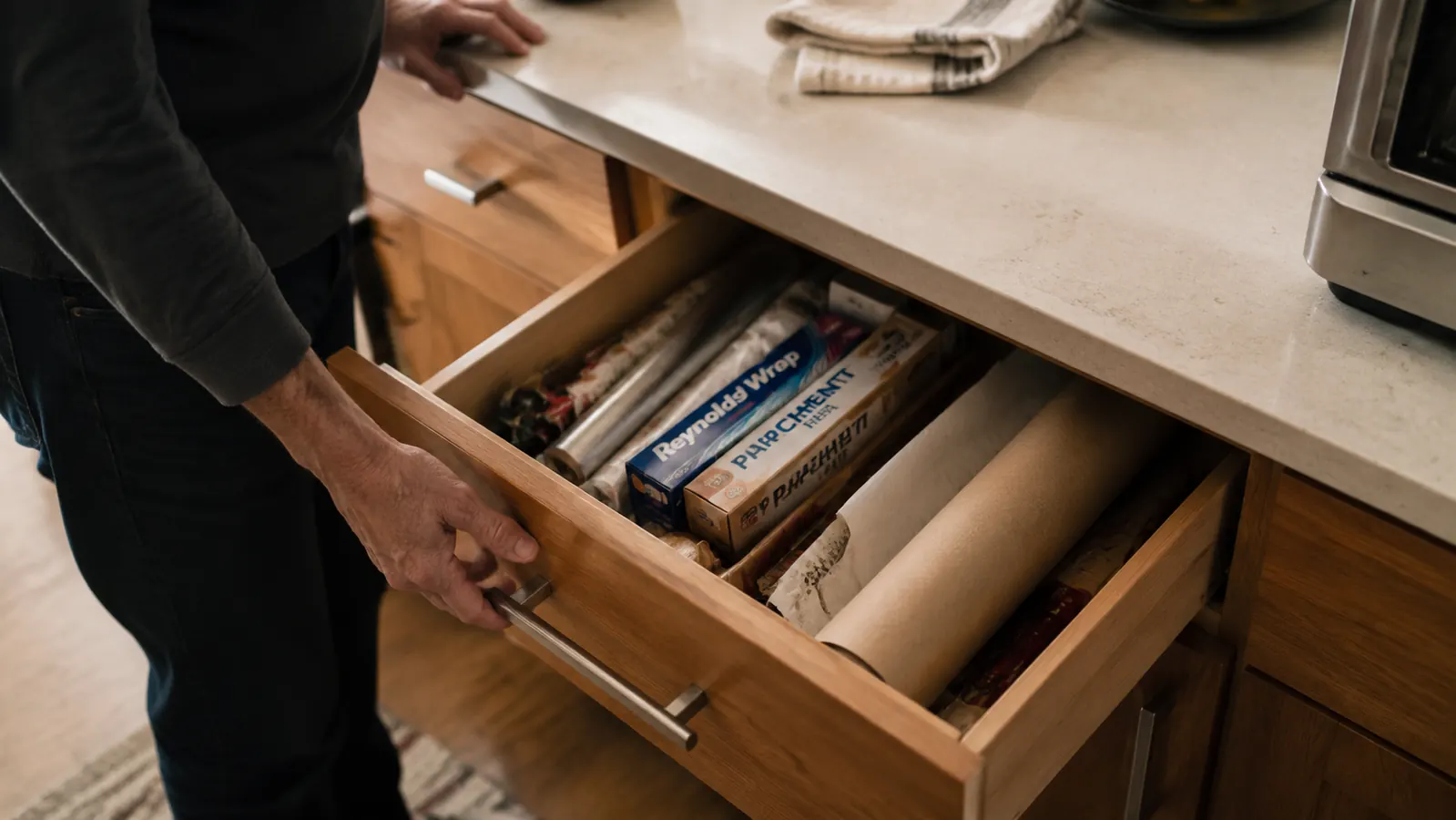
Storage is its own small headache. The roll doesn't come with any kind of cutter or holder, so it just sits in my kitchen drawer next to the foil and parchment, and after a humid Georgia summer, the outer layer of paper on the roll can feel slightly tacky. It hasn't ruined a roll for me yet, but I keep mine in a gallon zip bag now just to be safe, which is a step you won't read about on the product page or in most of the glowing reviews.
And here's the honest one nobody wants to say out loud: butcher paper will not save you from a bad wrap. I learned this the hard way on a Fourth of July cook when I wrapped a brisket too loose because I was rushing to get back to the grill for the burgers. The paper did its job, but a loose wrap let steam escape unevenly and I ended up with a drier flat than I wanted, even though the bark on top looked perfect. The paper is a tool, not a fix for technique, and it will show you your mistakes just as clearly as it shows off your good cooks.
How It Stacks Up Against What I Used Before
I ran foil for probably fifteen years before I made the switch, so I've got a real comparison to offer, not a guess. Foil is more forgiving if you're new to wrapping, it seals tighter so it's harder to mess up the moisture, and it holds heat a little more aggressively, which can push you through a stubborn stall faster. If you're smoking on a tight schedule and need predictability over bark quality, foil still has a place in the drawer, and I'm not going to pretend otherwise just because I've switched.
But foil steams the outside of the meat in its own juices, and that soft, almost boiled texture on the bark is the tradeoff nobody mentions when they recommend the Texas crutch to a beginner. Butcher paper lets enough moisture escape that you keep more of that dry, dark crust you spent all morning building with smoke and rubs. For a guy who cares more about that bite-through bark than shaving twenty minutes off his cook, paper wins for me most weekends, though I'll admit foil still comes out when I'm short on time and need the cook to move faster than the paper allows.
The Cost Question Nobody Runs the Numbers On
A roll of this paper isn't cheap next to a box of grocery-store foil, and I understand why some folks balk at the price before they've even tried it. But once I actually tracked it, one Bryco Goods roll has covered around eighteen cooks for me so far, counting the overlap sheets on bigger briskets, and I'm still not through it. Broken down per cook, it lands cheaper than I expected, and cheaper than the heavy-duty foil I used to buy specifically for wrapping. That math surprised me enough that I went back and double-checked it against my receipts.
Where that math falls apart is if you only smoke a couple of times a year. At that pace, a roll can sit in a drawer for a long stretch, and while I haven't had a roll actually go bad on me, the tackiness I mentioned earlier makes me a little cautious about how long I'd trust one sitting unused through a full humid summer. If you're an occasional cook, that's worth weighing against the per-use savings.
A Few Practical Tips I Wish Someone Had Told Me
Cut your sheet before you need it, not after. I know that sounds obvious, but the first few times I used this paper I tried tearing a sheet off with one greasy hand while holding the brisket steady with the other, and that's exactly how I ended up with jagged tears and a short temper. Now I pull two sheets ahead of time and lay them out on the counter before the brisket ever comes off the smoker, and the whole wrap goes smoother because of it.
I've also started wrapping shiny side down against the meat, mostly out of habit from foil, though with this paper it doesn't seem to matter much either way since both sides feel about the same to the touch. What does matter is wrapping tight enough that you don't leave air pockets, because those pockets are where I've noticed uneven color on the bark when I unwrap. A tight wrap with this paper gives you the most even results, tighter than I ever bothered with under foil.
One last thing nobody mentioned to me before I bought my first roll: keep a roll of butcher's twine or a couple of extra clips nearby if you're wrapping a brisket that's been trimmed down thin on one end. The paper holds its fold well on a full, evenly shaped brisket, but on an oddly trimmed piece I've had a corner work loose halfway through the rest, and a piece of twine tied around the middle has saved me from an unwrap-and-rewrap more than once.
What I Liked
- Heavy enough to survive wrapping a full hot, greasy packer brisket without tearing
- Preserves bark texture far better than foil during the stall
- Food-grade and unbleached, no added dye despite the pink color
- Enough paper on one roll to last close to twenty cooks for a regular backyard smoker
Where It Falls Short
- Dispenser box tears crooked more often than the marketing photos suggest
- 18-inch width means overlapping sheets on extra-large packer briskets
- No storage cutter or holder included, roll can get tacky in humid weather
- Paper alone won't fix a rushed or loose wrap job
The paper does exactly what it promises. It just won't cover for you on the mornings you're in a hurry.
Who This Is For
If you've already got your smoke and rub dialed in and you're chasing that last bit of bark quality, this is the upgrade worth making. It's also a good fit if you cook brisket or pork butt often enough that buying a roll instead of a small box of sheets actually pencils out, which for most backyard cooks doing a handful of cooks a month, it will, especially once you factor in what I found tracking cost per cook over a full roll.
Who Should Skip It
If you smoke maybe twice a year and you're happy with the texture foil gives you, save your money and stick with what you've got, or buy the smaller pre-cut sheets instead of a full roll that might sit around too long. And if you're still working out your wrap timing or your stall management, spend a few cooks getting that right on foil first. Paper rewards good technique, it doesn't teach it, and it will happily show off a rushed wrap just as clearly as a careful one.
Ready to see if pink paper fixes your bark problem too?
Check current availability and today's price on Amazon before your next smoke.
Amazon Check Today's Price on Amazon →